Re: Pacific Coast Models 1/32 Fw 190A-1. Black 13. Belgium,
Posted: Sat Feb 09, 2019 8:48 am
All the test fitting is paying off, the hub looks great and sitting center.
https://www.spamodeler.com/forum/
Your gift is much more than any kit, Clint! I truly mean that. Thank you for the opportunity to improve!Floki wrote:All the test fitting is paying off, the hub looks great and sitting center.
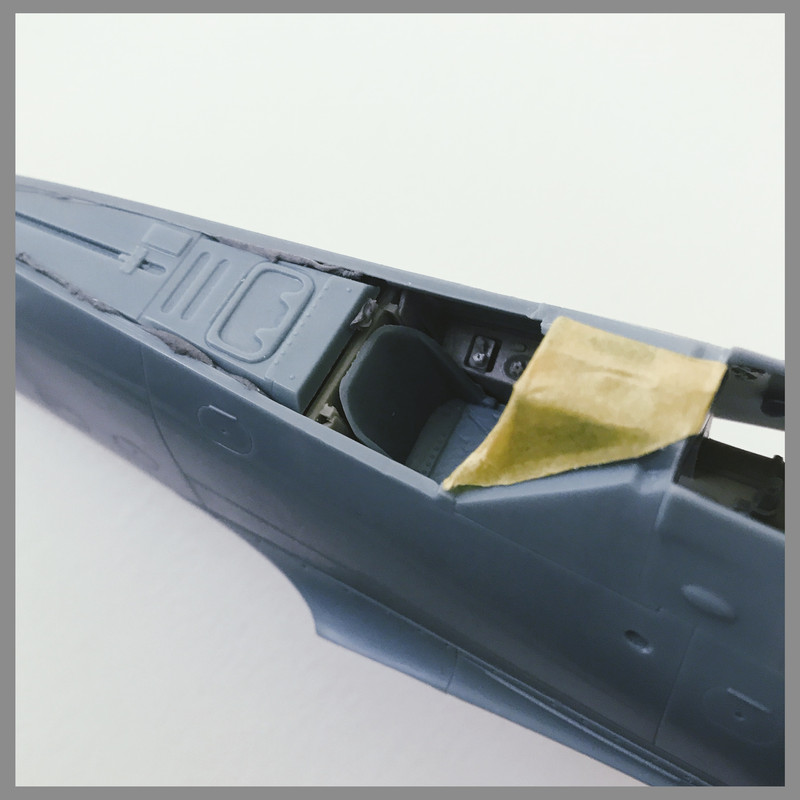
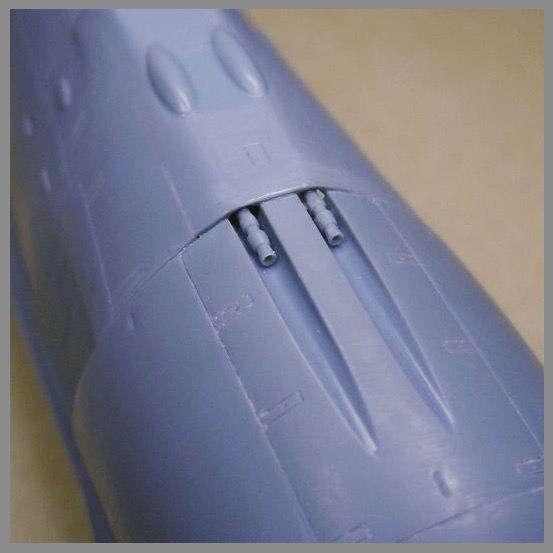
First thing that stands out is that you have to close those cooling slots. Should be no biggie. Will dig in further into the subject later on.In October 1940, the first of 40 Fw 190A-0 on order came from the production line. They received designations characteristic of prototypes: Fw 190V6 W.Nr.0006 and Fw 190V7. Both had the old wing because production started before introduction of the new wing and the first nine airframes were so advanced that the decision was made to introduce the modification from W.Nr.0015 plane. So, the two prototypes and seven of the Fw 190A-0 had the smaller wing. Simultaneously with the new wing, a bigger horizontal tail was introduced. However, the enlarged vertical tail not applied until later, from the A-2 version.
The Fw 190 V6 was used for characteristics and performances tests. Fw 190V7 was used for testing of a heavier armament consisting of two 20 mm Rheinmetall-Borsig (Oerlikon licence) MG FF cannons (in addition to the four MG 17 machine guns), mounted in the wing centre section just aft of the main gears attachment point. After firing tests at Tarnewitz, this armament was standardized for the Fw 190A-1 planes until the introduction of the 20 mm Mauser MG 151/20 cannons in place of the wing mounted MG 17. This became possible after the introduction of the new synchronizer (for firing through the propeller arc) that had not been ready for the series production.
Starting in November 1940, deliveries of the Fw 190A-0, with BMW 801 C-1 engine in place of pre-series C-0, began with the W.Nr.0010 plane. From the 40 planes ordered, only 28 were built (to W.Nr.0035), most of which were later converted to prototypes used for various armament configuration tests. On some planes new engines and special equipment were tested; e.g. in the summer of 1943 on the Fw 190A-0 (W.Nr.0022, SB+IE) an ejection seat was tested in Langenhagen under the supervision of Hans Sander. It was ejected by a powder charge. These planes received variously the modification designation V used for prototypes or the supplemented letter designation U (Umrüstbausatz). There are a large number of U modifications of Fw 190A-0 (from U1 to U13) known of various A-0 airframes. Because of limited space in this article it's impossible to present each modification in detail.
Before beginning the planned series production of the first Fw 190A-1 it was necessary to finish up details of the plane and get some experience in maintenance and service use in line units. Among the desired experience was operation from operational airfields and preliminary training of pilots and support personnel.
Because of this II./JG 26 squadron pilots and maintenance personnel team were taken from their unit and formed the basis of experimental squadron (Erprobungsstaffel) 190, formed in March 1941. The unit was commanded by technical officer Oberleutnant Otto Bahrens and received six Fw 190A-0 (W.Nr.0013, 0014, 0018, 0021, 0022). The first training was conducted under the supervision of specialists from the Rechlin establishment on these planes. Flights were made from Rechlin-Roggenthin airfield.
Later this unit was transferred to Le Bourget near Paris. During these intensive tests frequent engine failures occurred. The BMW 801 engine still had a tendency to overheat, especially the back bank of cylinders. Overheating occurred generally on the ground during long runs at low power when the flow of cooling air was reduced to a minimum. Troubles were encountered with the automatic control unit (Kommandogerat) of the BMW 801 engine, with leaks in the fuel and lubricating pipe system and also with fast wear of the spark plugs. Troubles with the constant speed VDM propeller continued. During tests it was discovered that engine cowlings had a tendency to open during flight because of weak cowling lock construction.
A more dangerous surprise was with the emergency ejection of the rear cockpit canopy, especially during flights with speeds over 250 km/hr, that was caused by airflow pressing the canopy to the fuselage. This problem was solved by addition of a small powder charge used for firing of canopy. The large number of such serious defects was the reason that a special RLM Commission came to Le Bourget and ordered the test program to stop until all defects would be remedied. After about 50 modifications, the RLM approved Fw 190 deployment to Luftwaffe service units.
The RLM placed an order with the Focke-Wulf factory for 100 Fw 190A-1 planes. Because of plans to increase the order it was obvious that the Fw 190 program should include factories producing the plane on licence. Initially, production lines in Focke-Wulf Bremen and Marienburg factories were prepared. The first Fw 190 planes produced on licence would be made at the Arado factory in Warnemünde and at the AGO factory in Oschersleben.
Summory of features:
- No cooling slots behind the engine
- Cowling cheek blisters with symmetrical teardrop shape.
- Initial short propeller spinner
- Upper cowling panel partially overlapping the (unarmoured) forward oil ring
- Unbraced armoured headrest
- Inner undercarriage doors open on the ground
- Armament of MG 17s only, both in the fuselage and wings, recognizable by lack of
protruding barrels or blisters in inboard wing positions- No undercarriage indicator pins