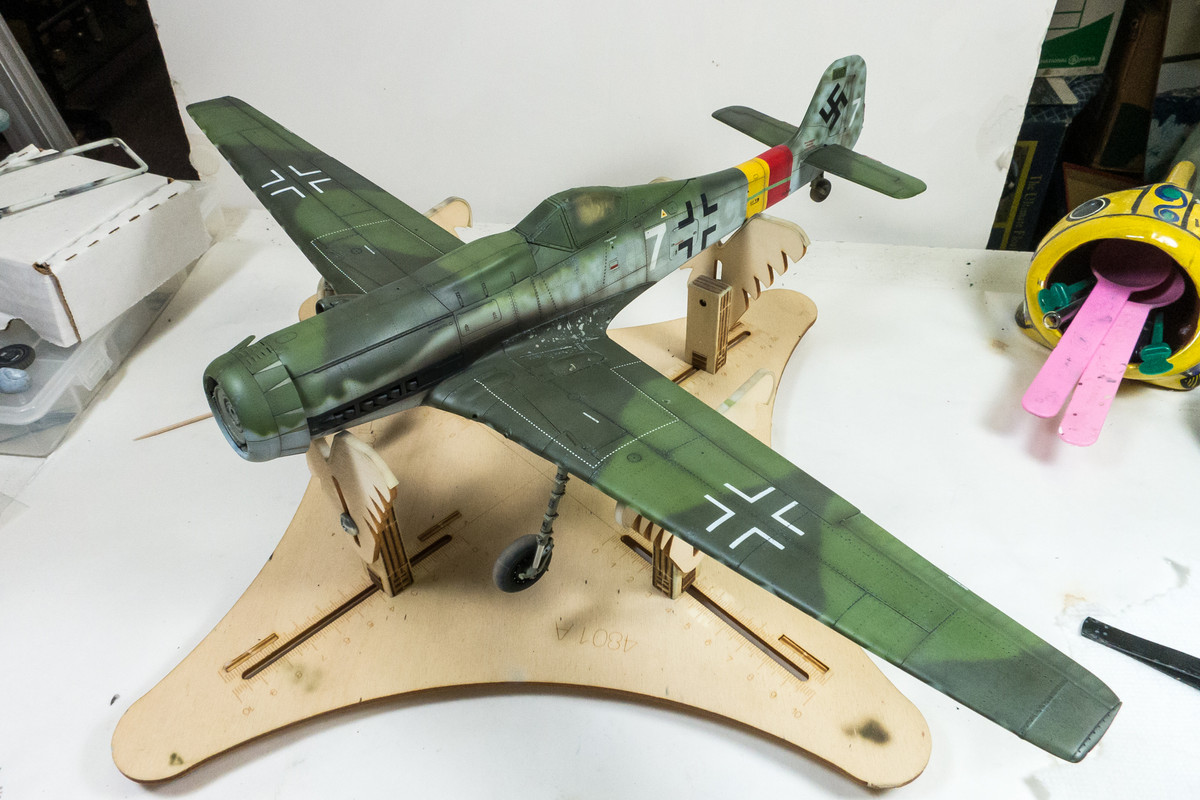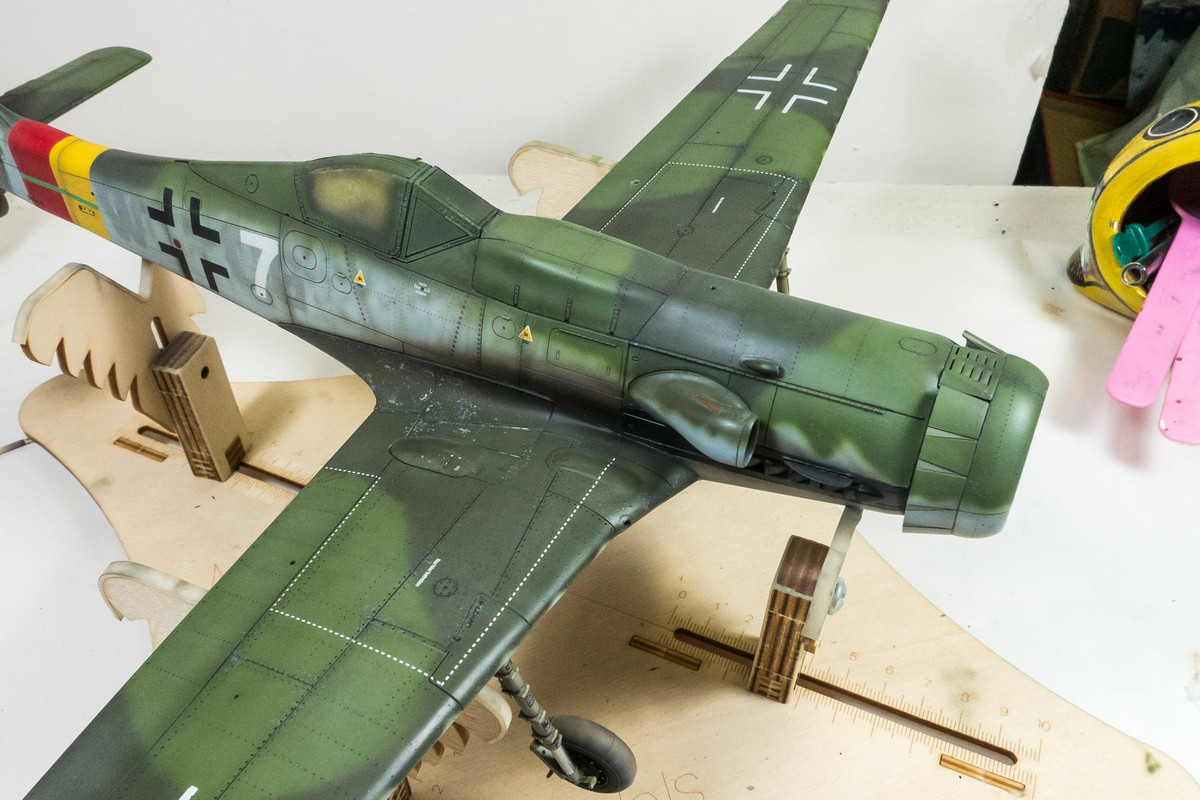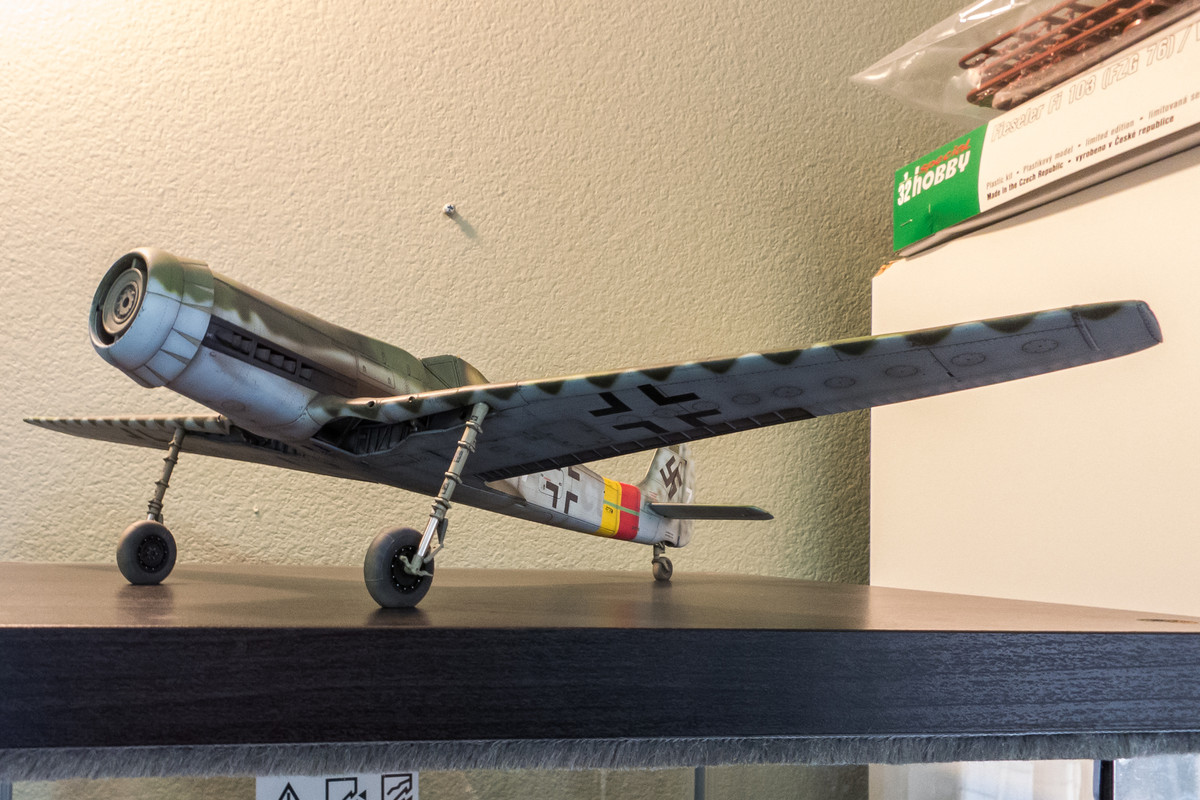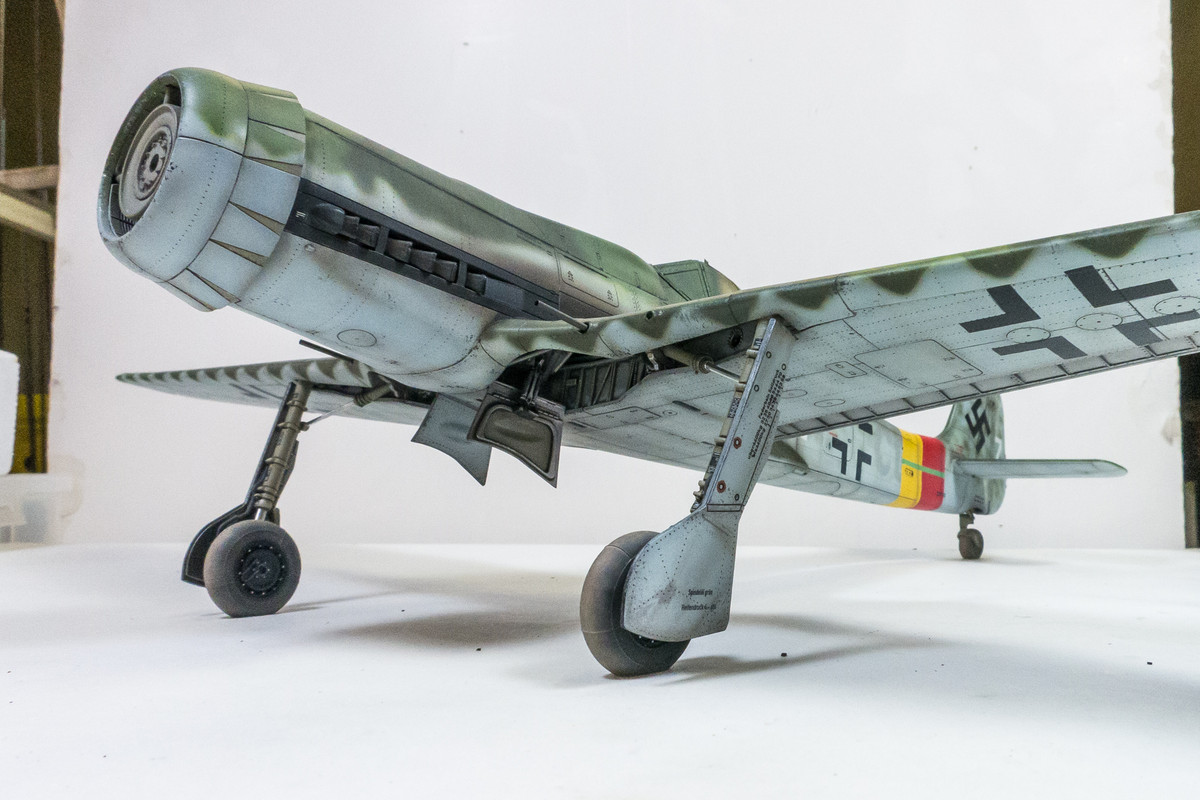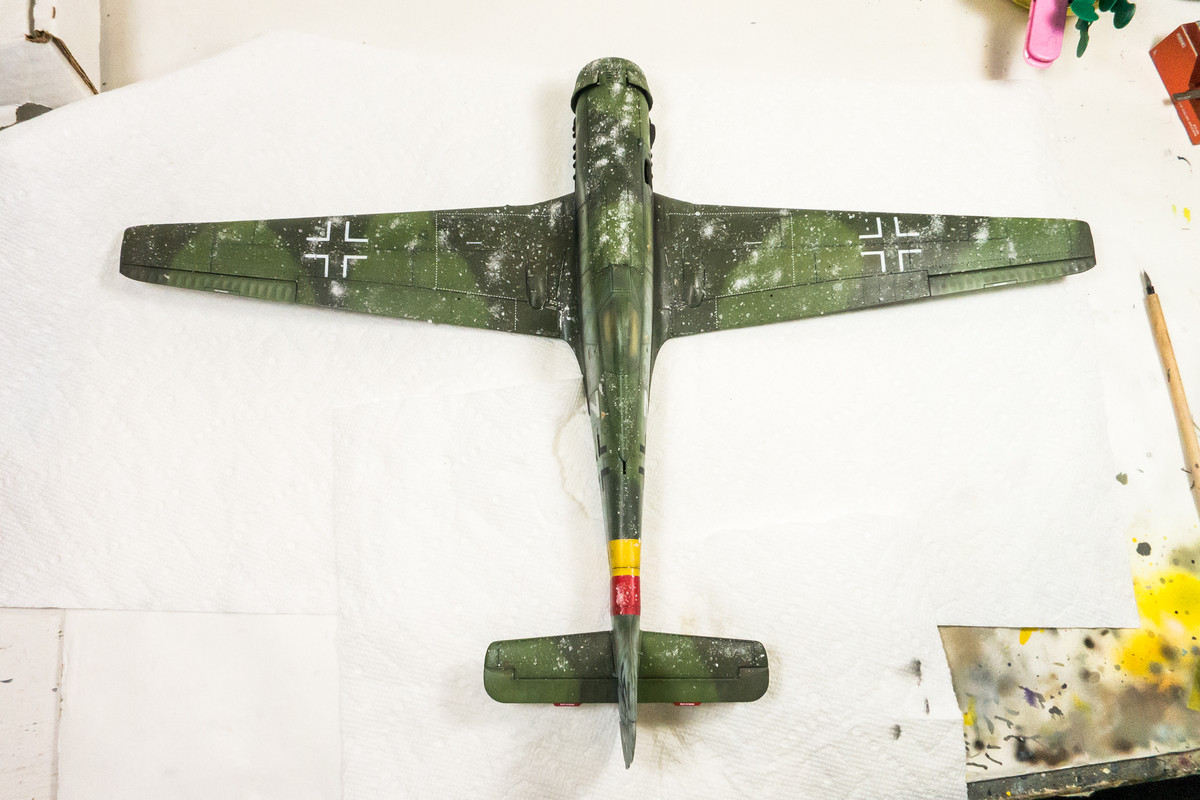
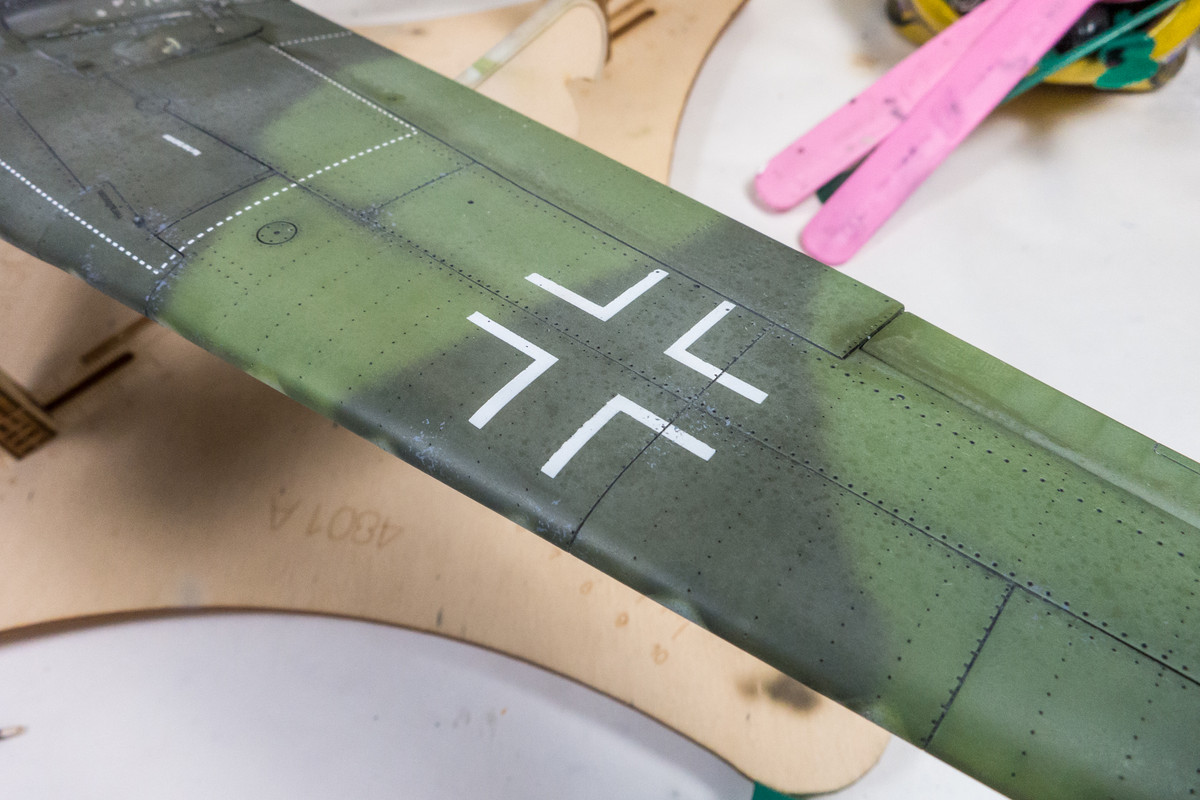
After the water dries completely, you spray a very light coat of color. When you remove the salt after the paint dries, the result should be a random pattern formed by the salt crystals that mimics a surface that has been exposed to the elements. But the line between too subtle and too harsh is difficult to gauge. My first try on the Ta-152H resulted in no visible effect. Too subtle. So I tried one more time. A little more successful but I started to get a little bit of white frost on the finish that I had to beat back by spraying the affected areas with straight lacquer thinner laced with a touch of gloss.
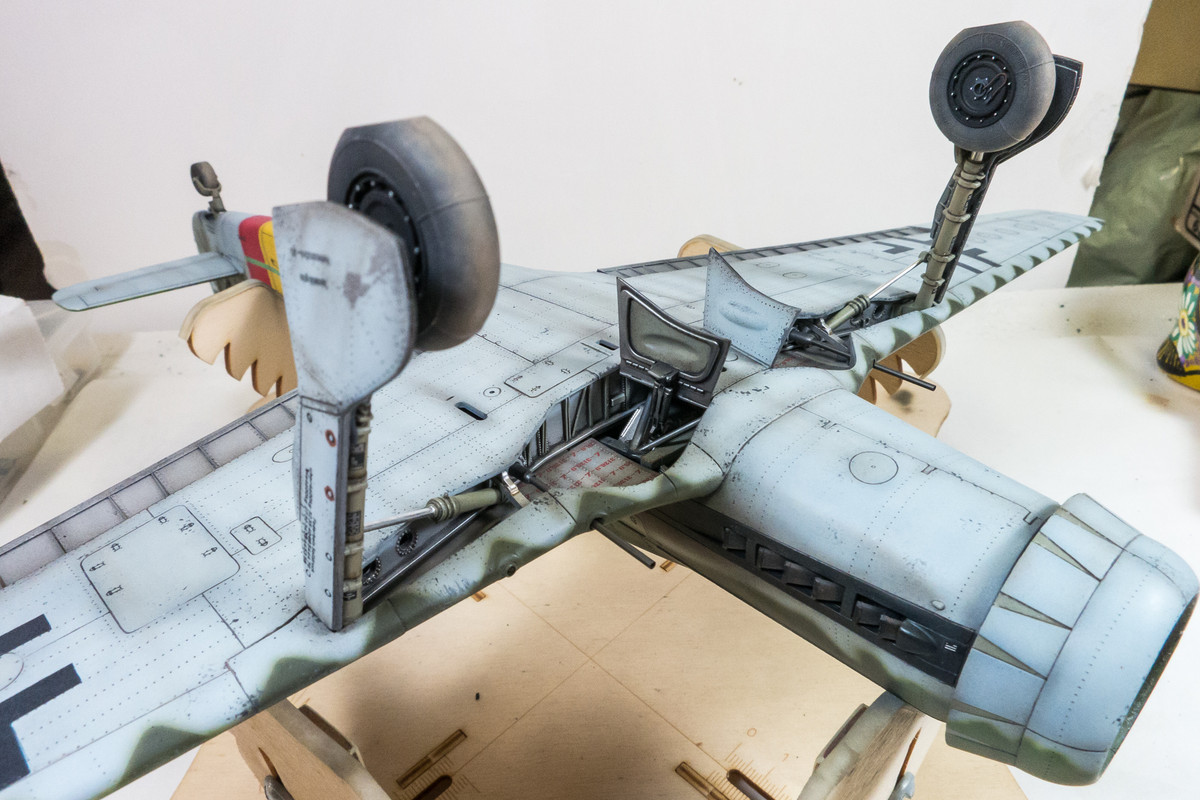
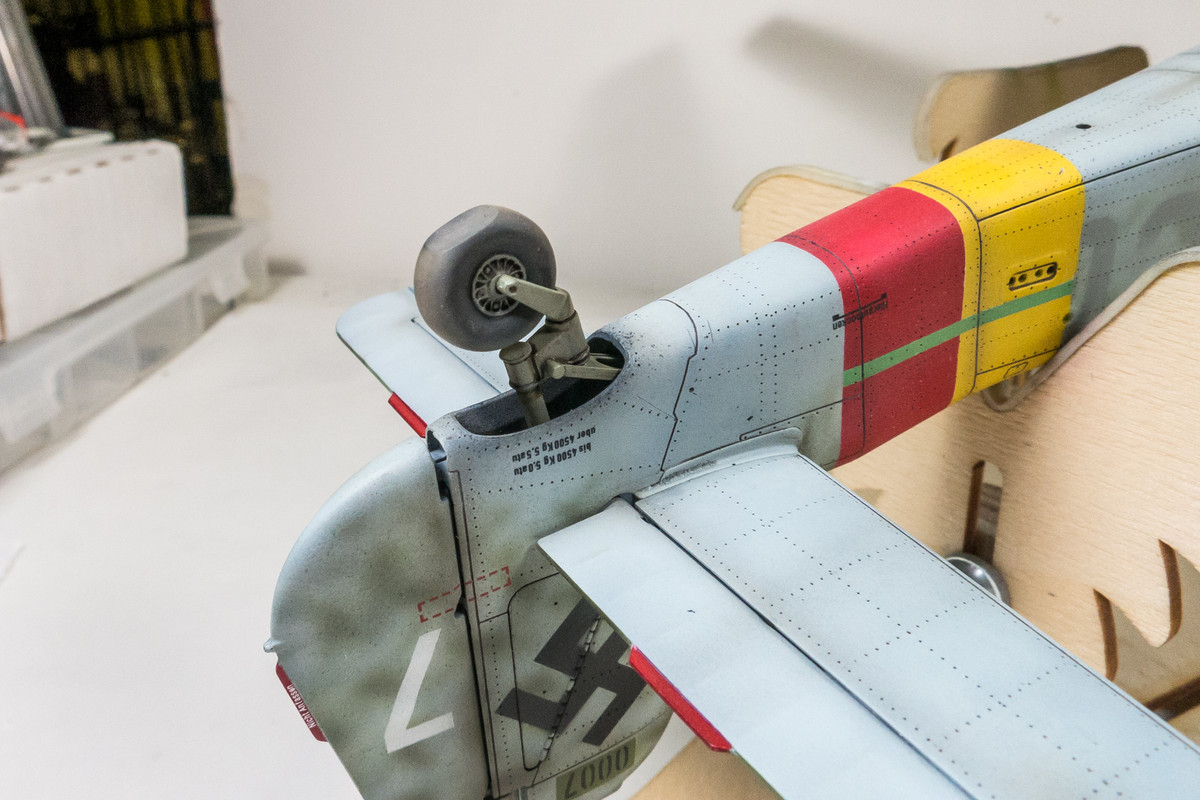
We can take a look at the results of the salt fading a little later but I wanted to move on. I flipped the bird on its back and put in the tail landing gear. No issue there although the connection isn't as rock solid as I would've hoped.
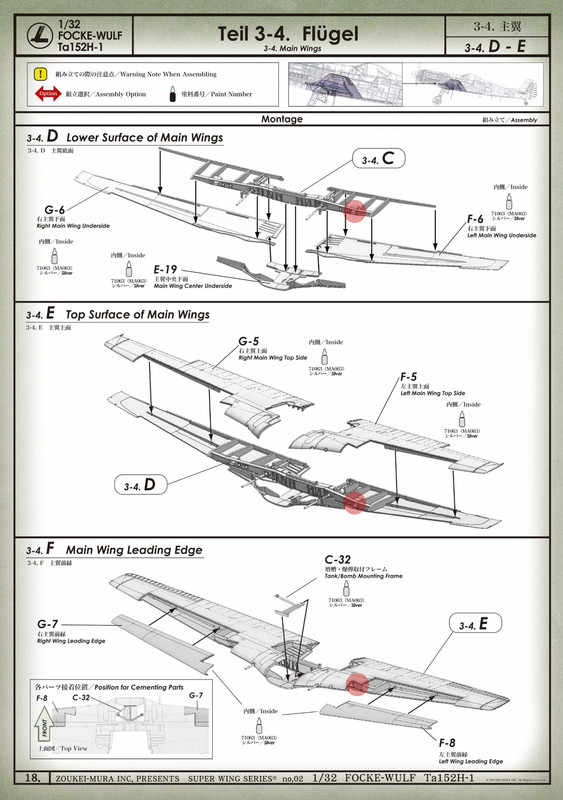
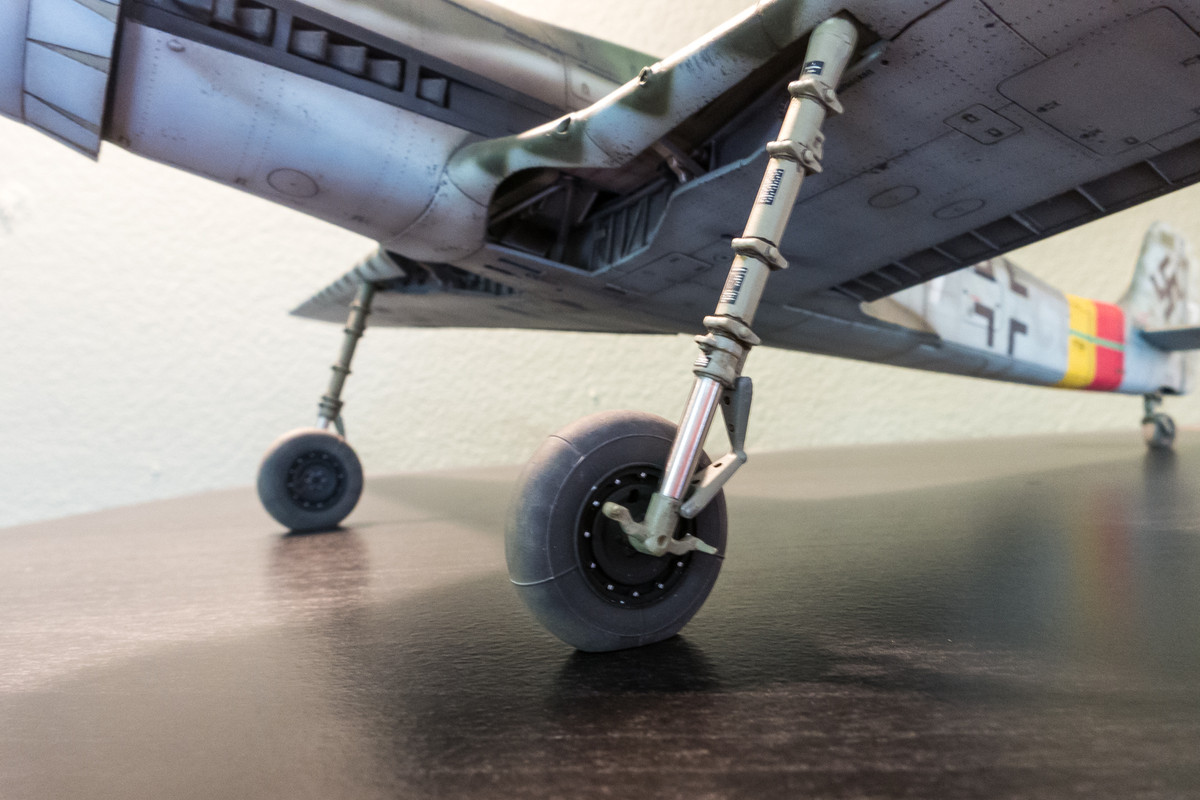
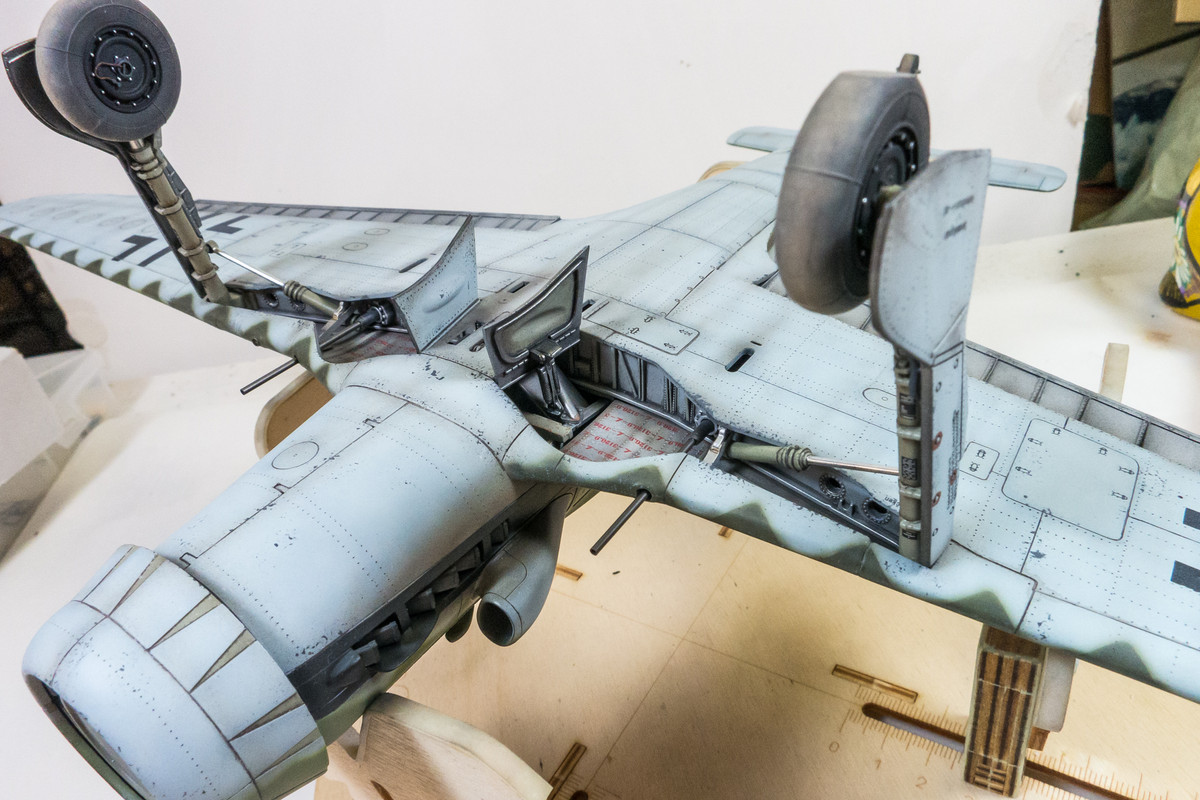
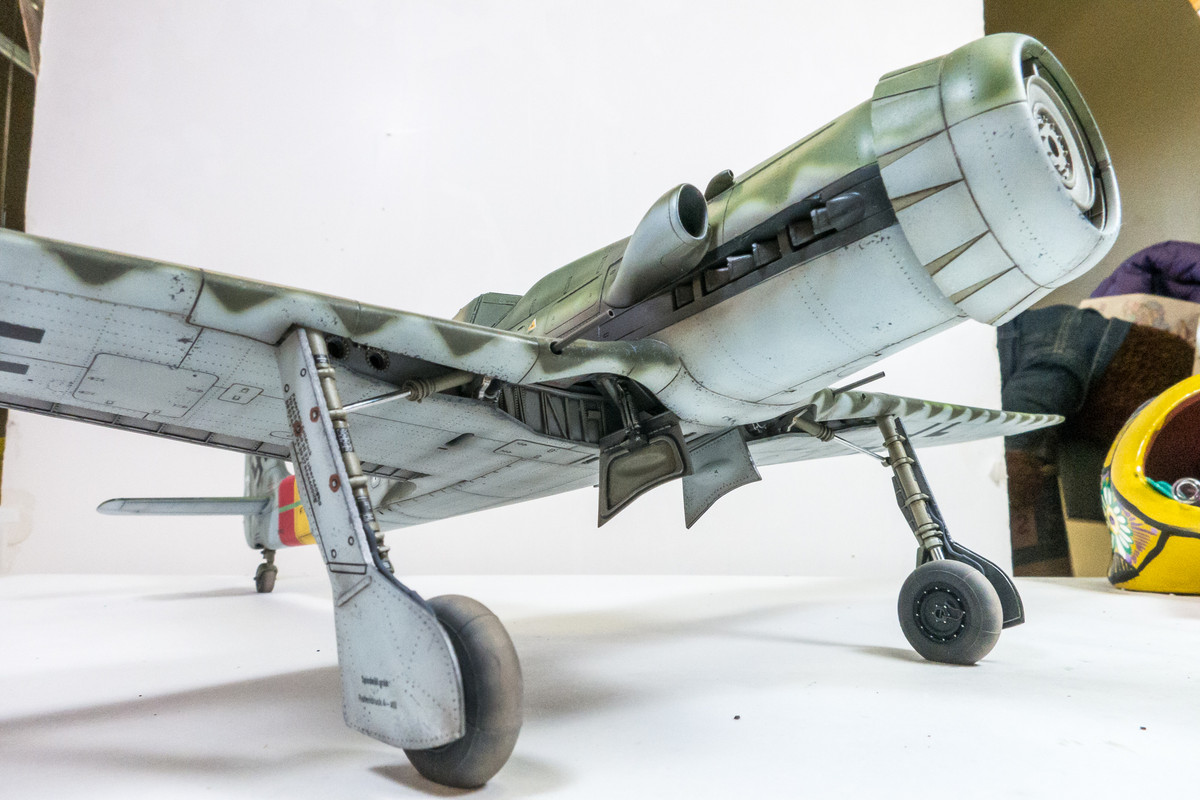
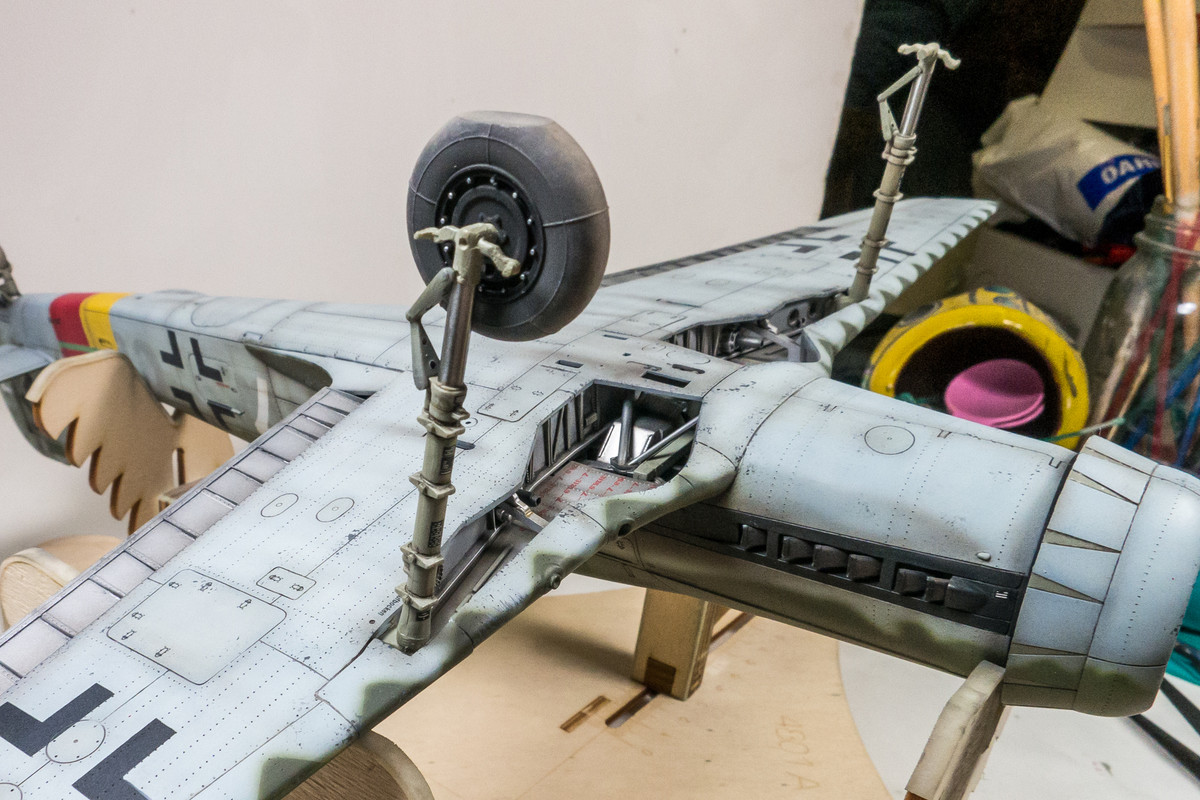
Next I attempted to install the main landing gear. This step has made me nervous ever since I saw the instructions. The fit was going to be super-tight and the way the attachment is designed, I was afraid that any attempt at a dry-fit would've locked the gear in place for good. It's a unusual method of attachment to say the least and involves an insert-and-twist move that is just reeks of potential disaster. Seriously, Z-M?

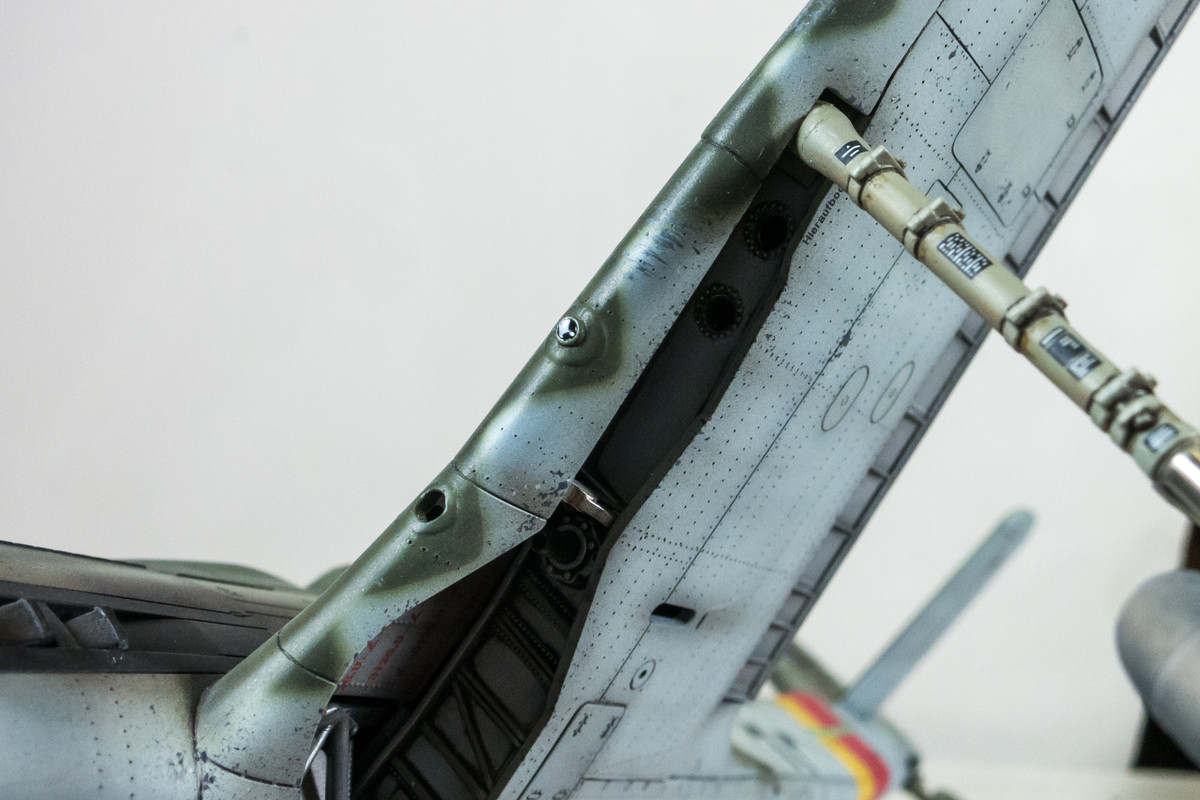
It took me a few attempts to get this to work. I had no choice but to force the legs in and that ended up crack the adjacent wing joints. Not to a catastrophic degree but enough to require some careful repair on both sides of an already highly repaired joint.
So a momentary pause while I applied liquid glue and hope that I can get a good bond. If not, I'll have to resort to thin CA glue, which I probably should've used off the bat. The tape is over the worst separation.
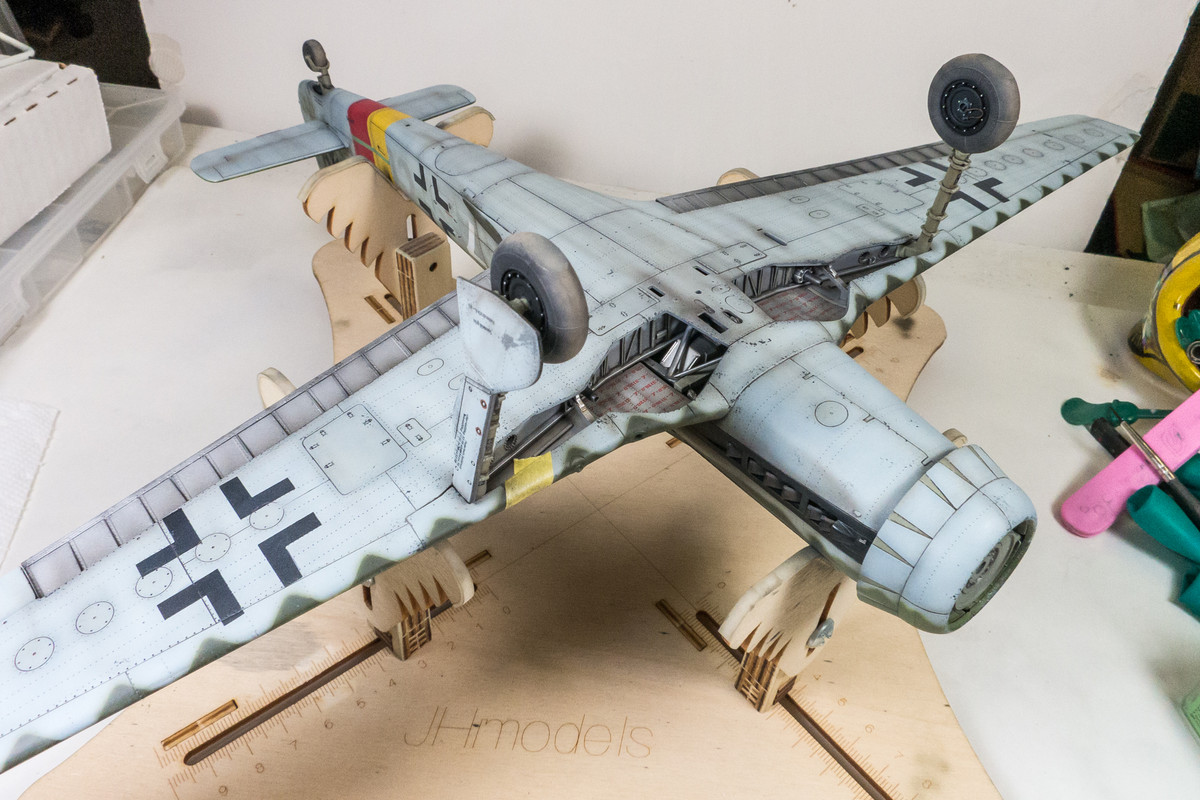
Good news is that the model is still in one piece.





 Knowing me, I’d break the struts and then some along with some courtesy cussing.