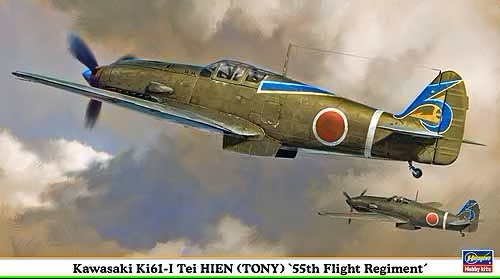
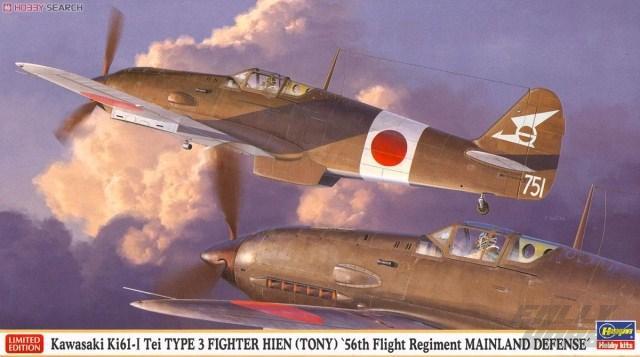
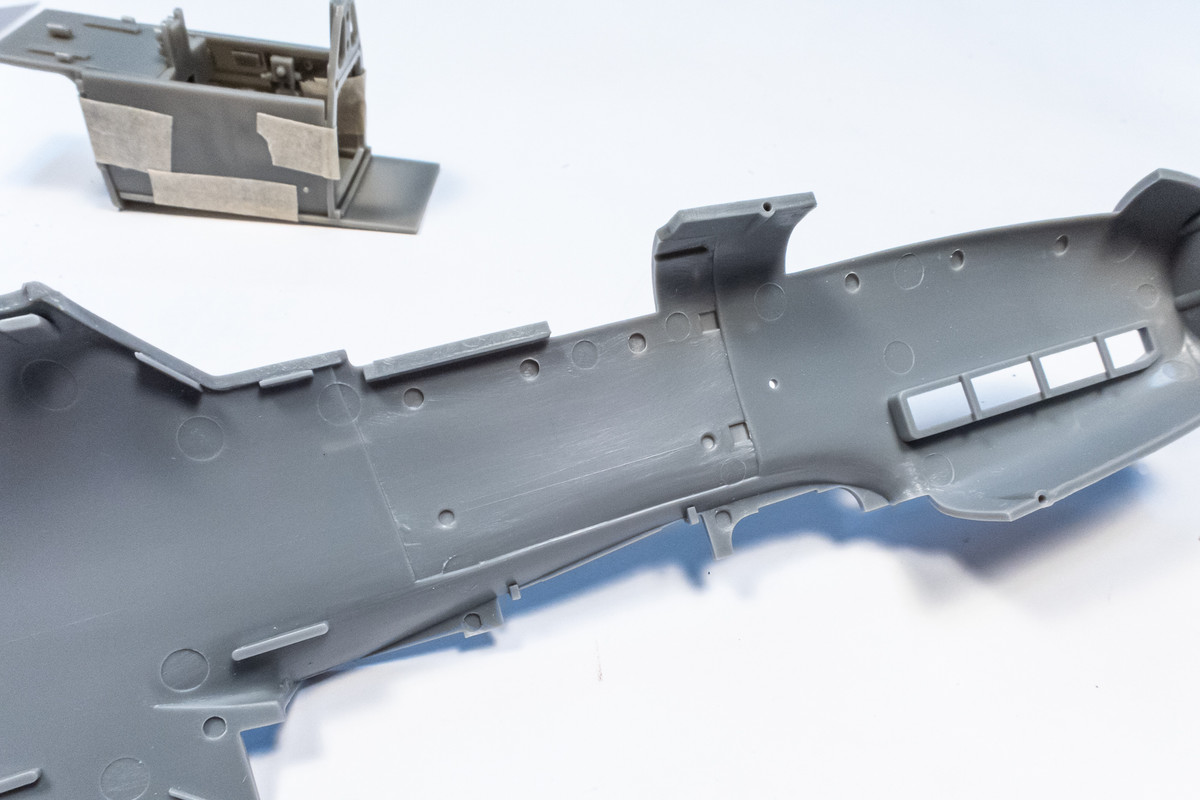
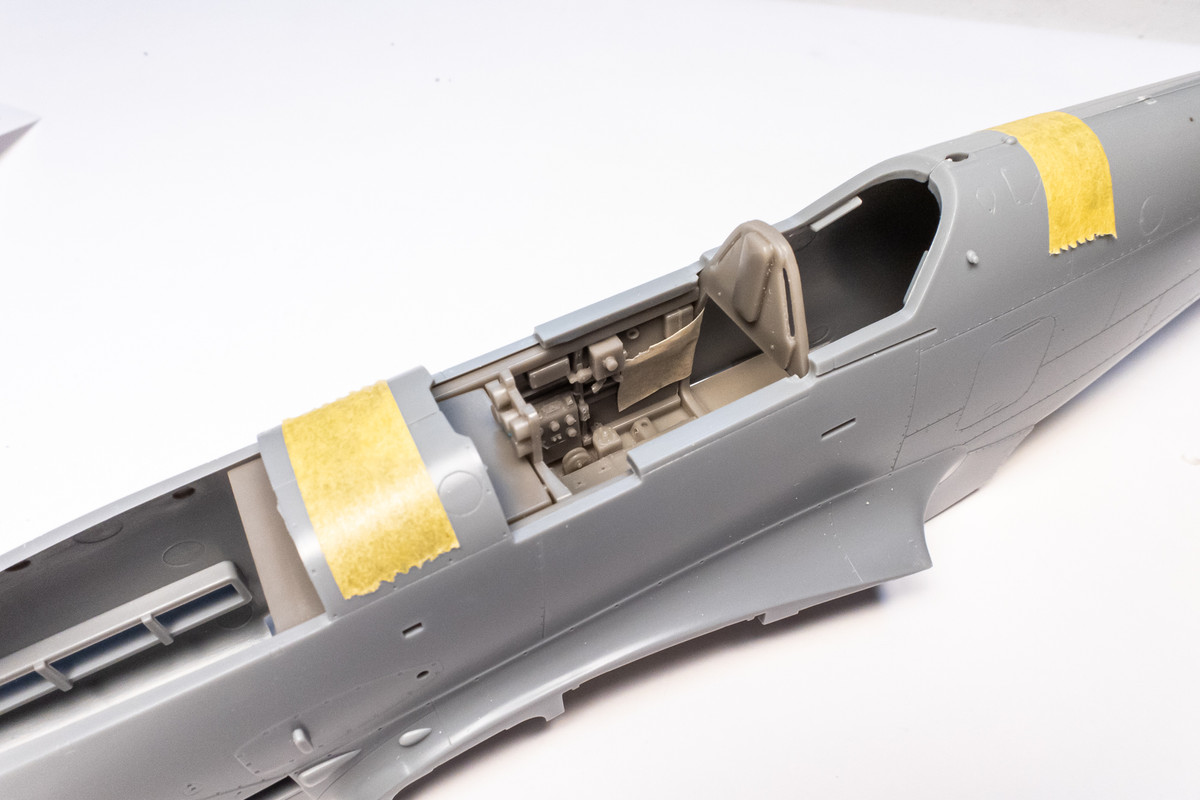
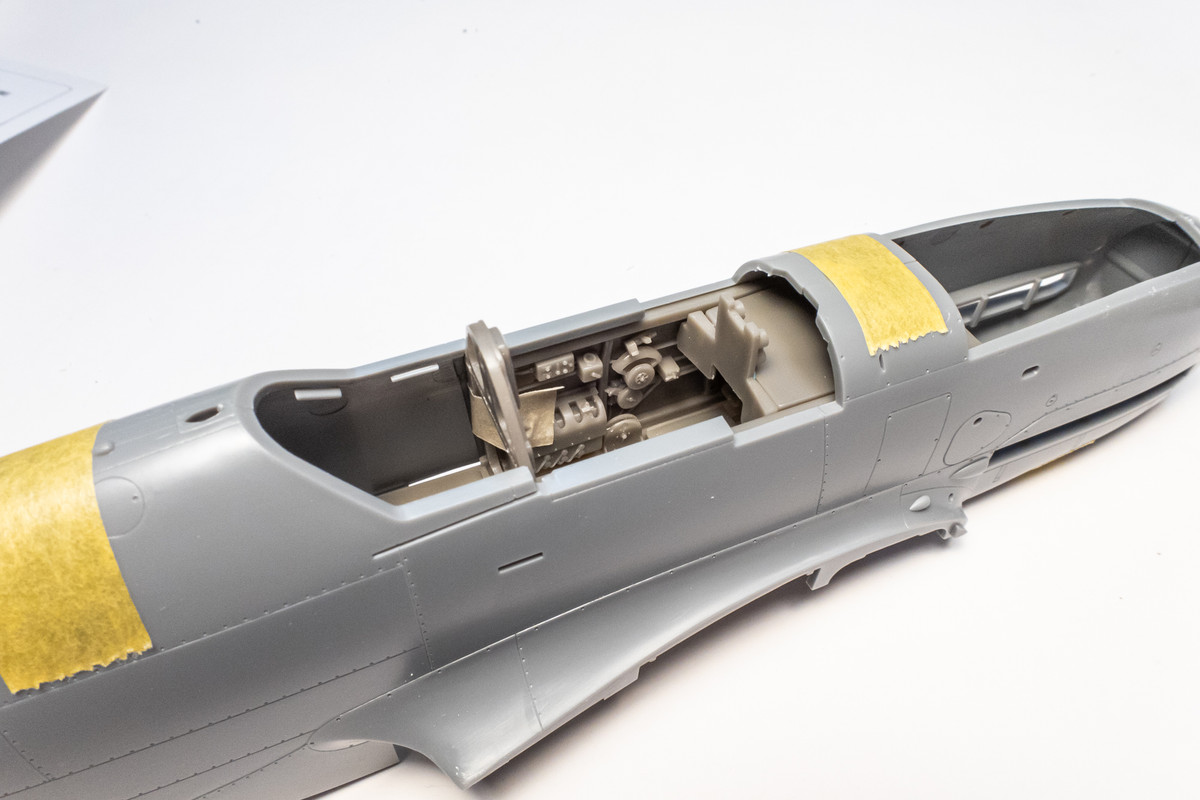
This is the Hasegawa 1/32 Ki-61-1 Hei model kit. The Ki-61 was Japan's only operational fighter aircraft in WW2 to utilize a liquid-cooled inline engine. Many have compared it to the Bf109 since the engine utilized was a license-built Daimler Benz DB 601 but the Hien was an independent design by Kawasaki. The model kit is a typical modern Hasegawa large scale release... maybe not as much internal detail and frills compared to Zoukei Mura and Tamiya but nicely done nonetheless.

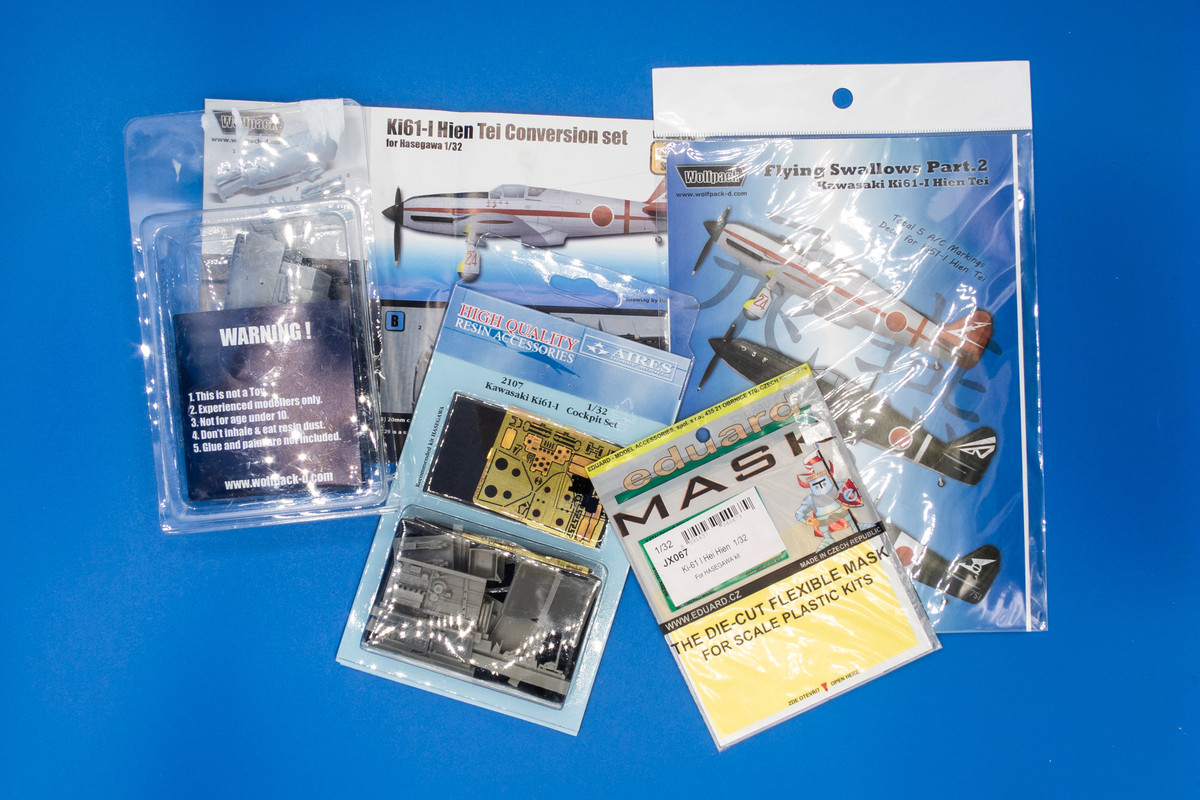
I've got a relatively small amount of aftermarket stuff that I'm going to include with this build that I will get into more detail later.
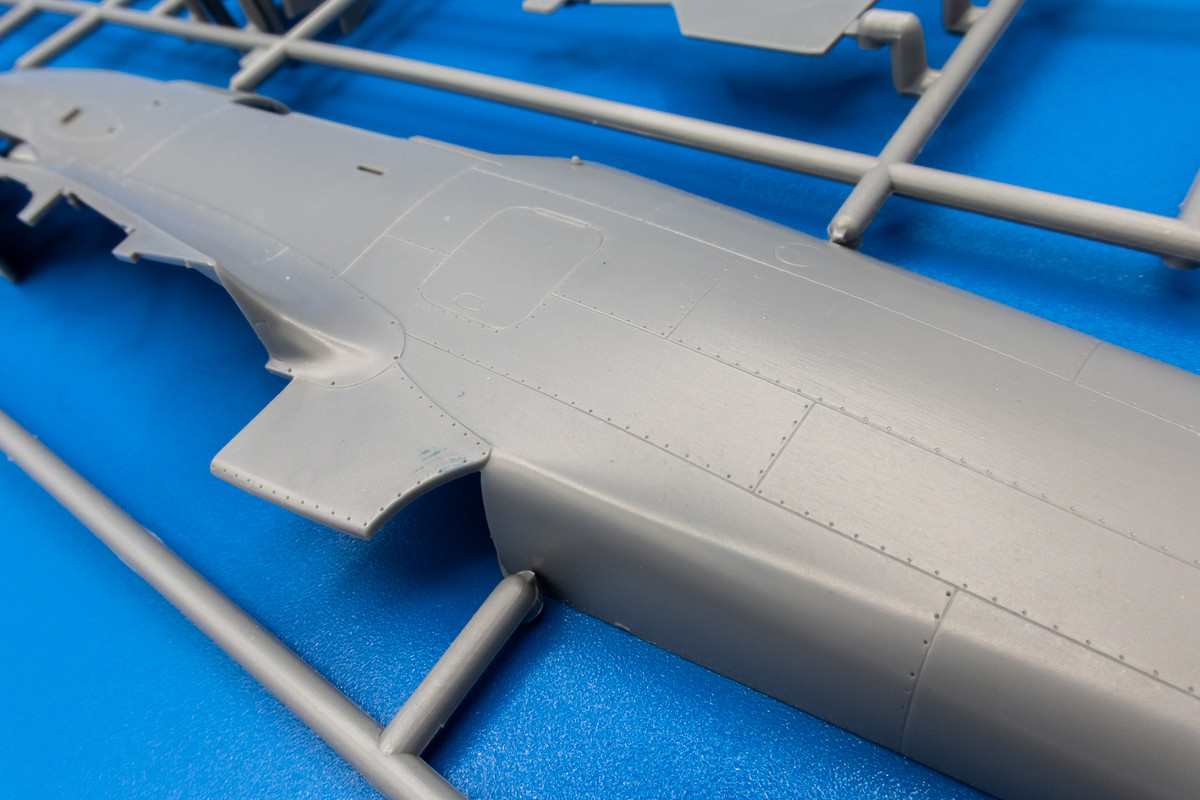
The kit is molded in typical Hasegawa fashion... very fine details in neutral grey plastic.

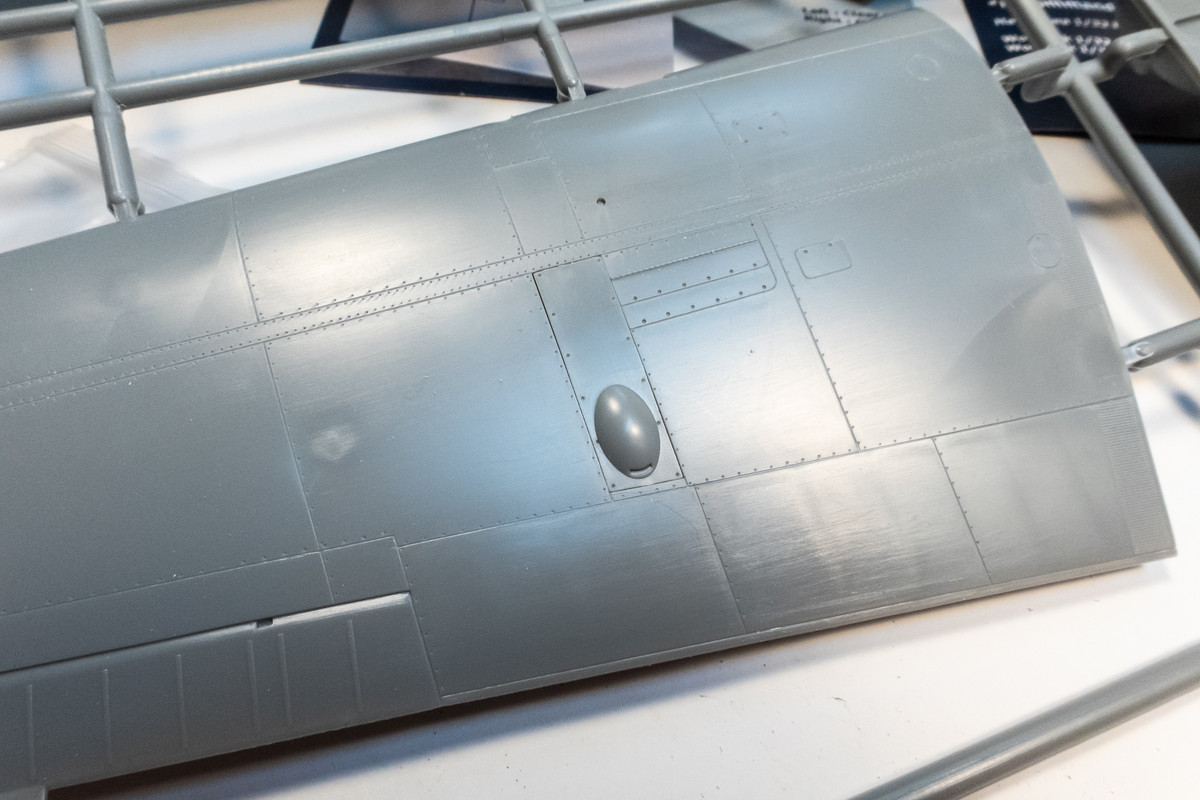
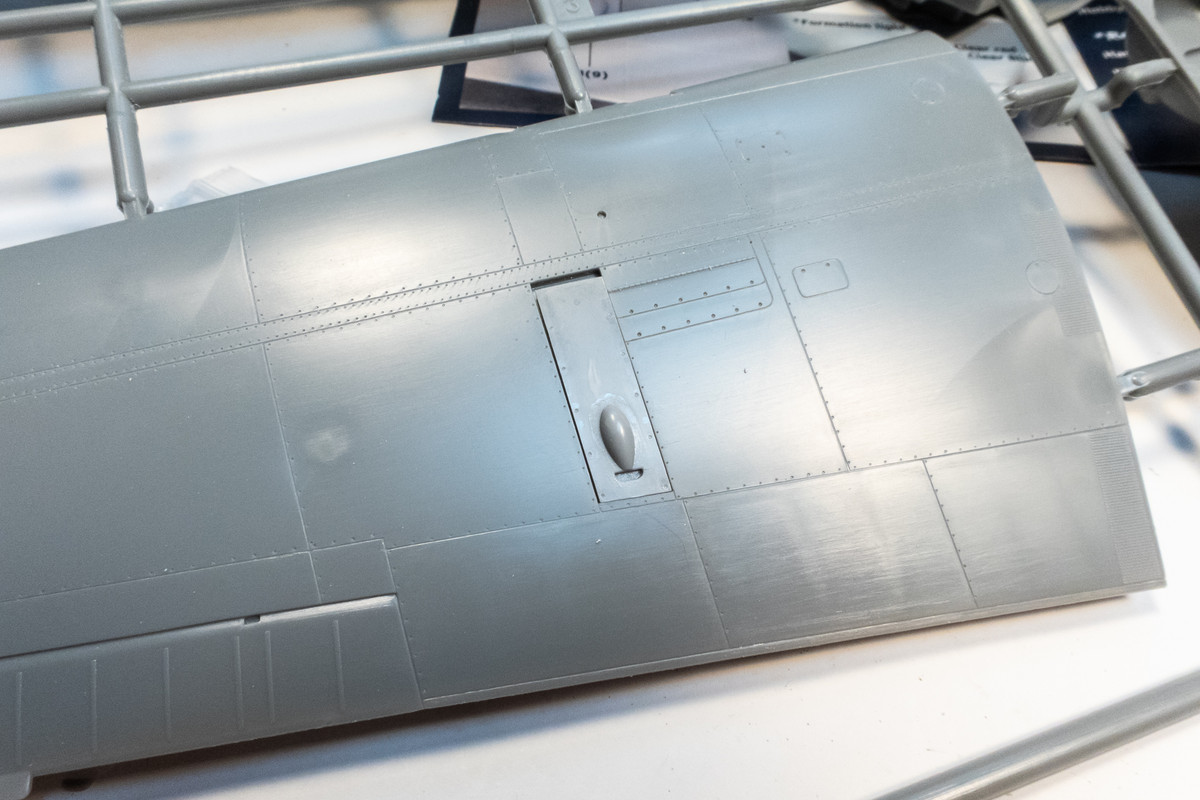
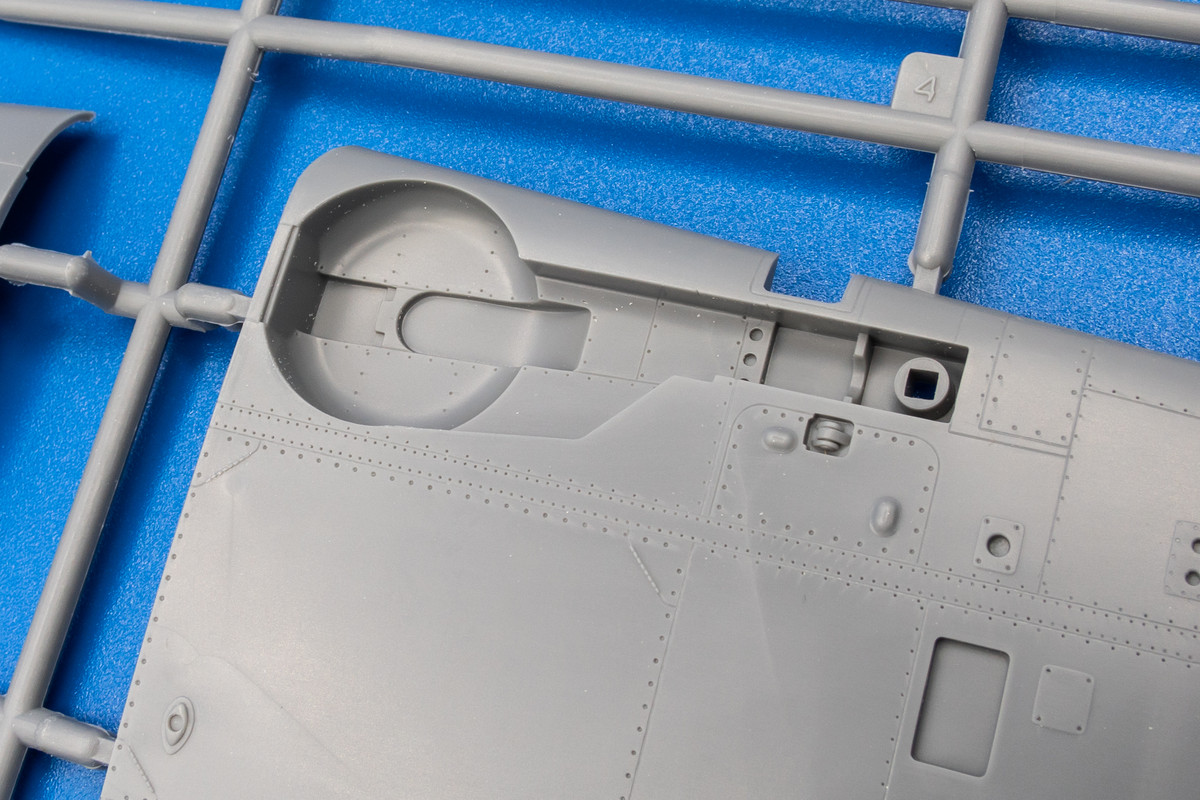
The exterior features finely recessed panel lines and delicate rivets along the panel lines. Because of the latter, I am thinking of NOT adding any additional rivet detail on this build.
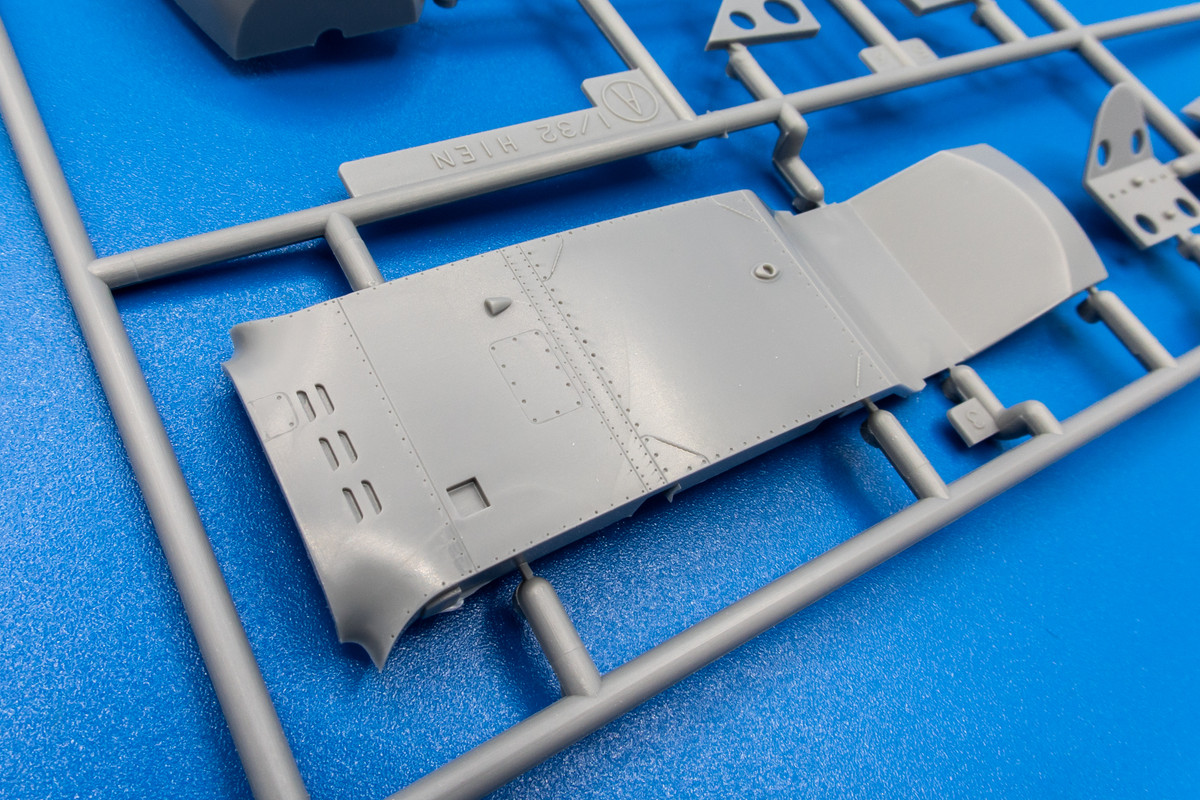
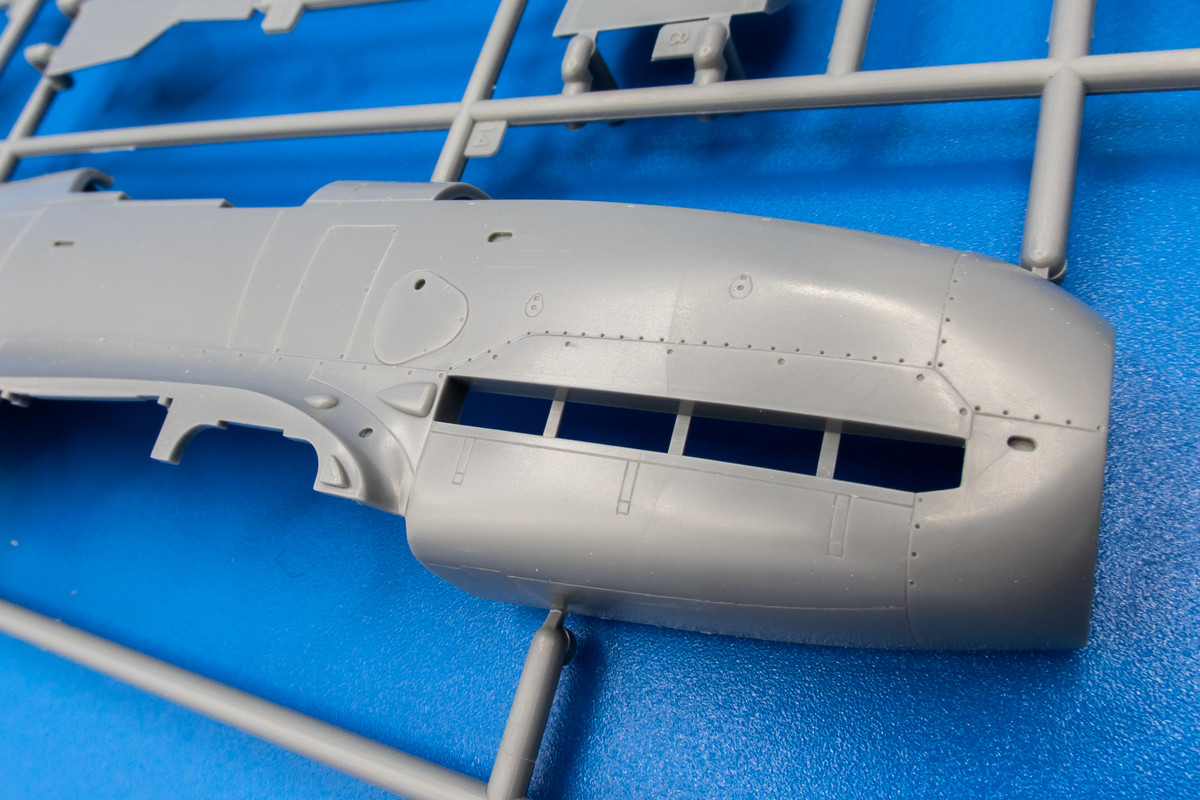
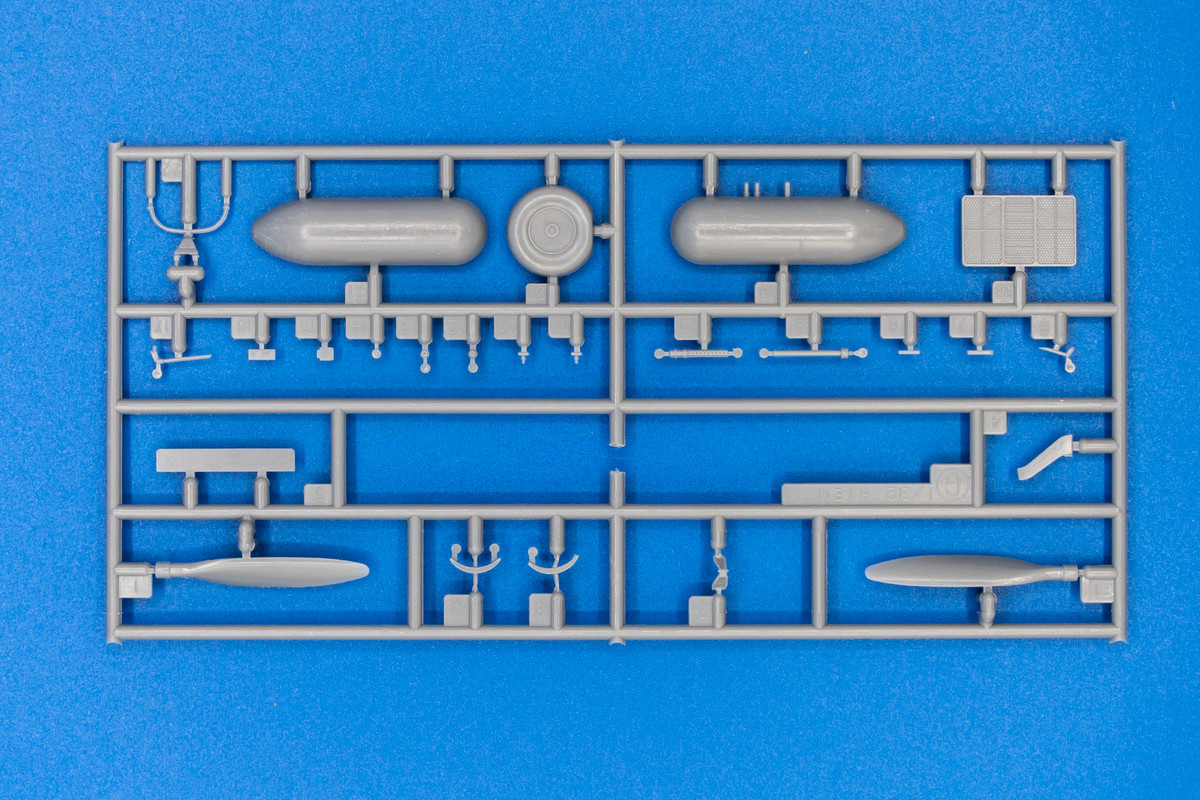
This kit is comprised of five sprues of grey parts and one clear. In typical Hasegawa fashion, all of the grey trees are encased in a single bag so a careful check of scuffing and/or broken parts is recommended.
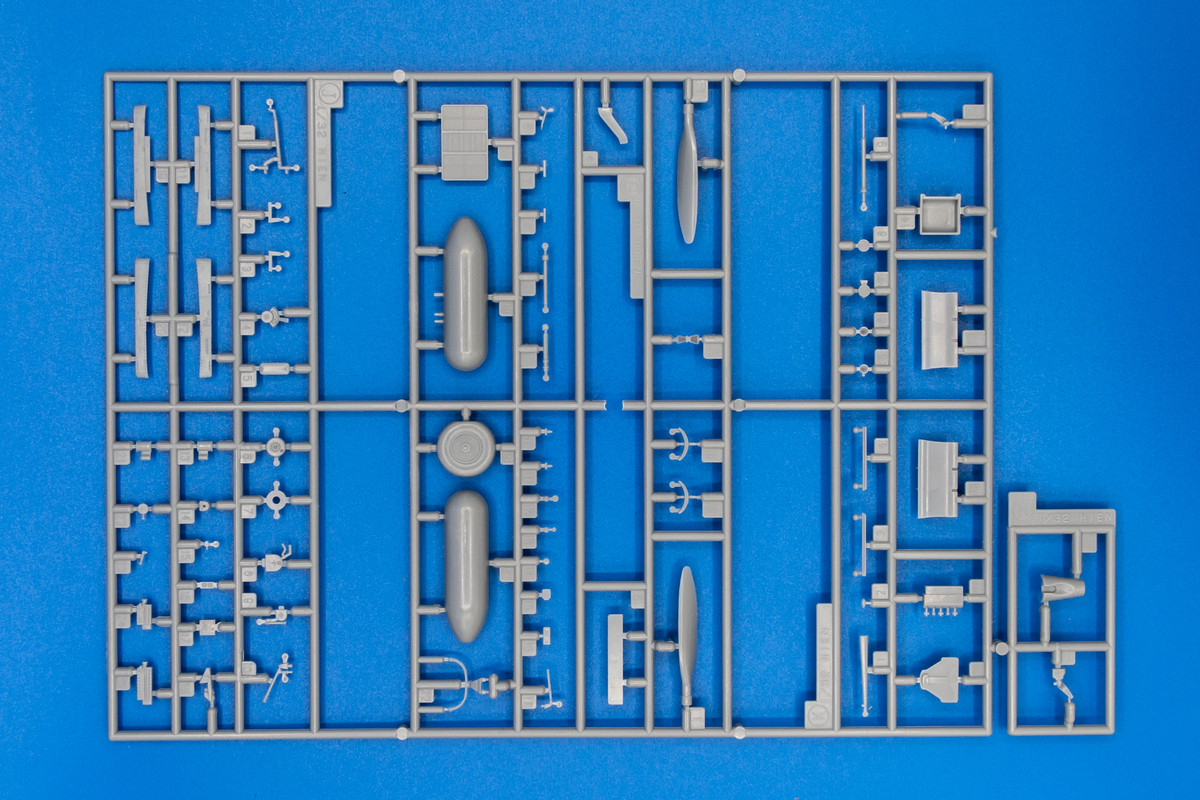
Surprisingly, the simple rendition of the main tire has a flat spot and subtle bulge to portray a pneumatic tire under a weight load. It is very rare to see a weighted tire in a mainstream kit.

The molding quality is excellent and again, breaking tradition from most other manufacturers, Hasegawa elects to offer a pilot figure.
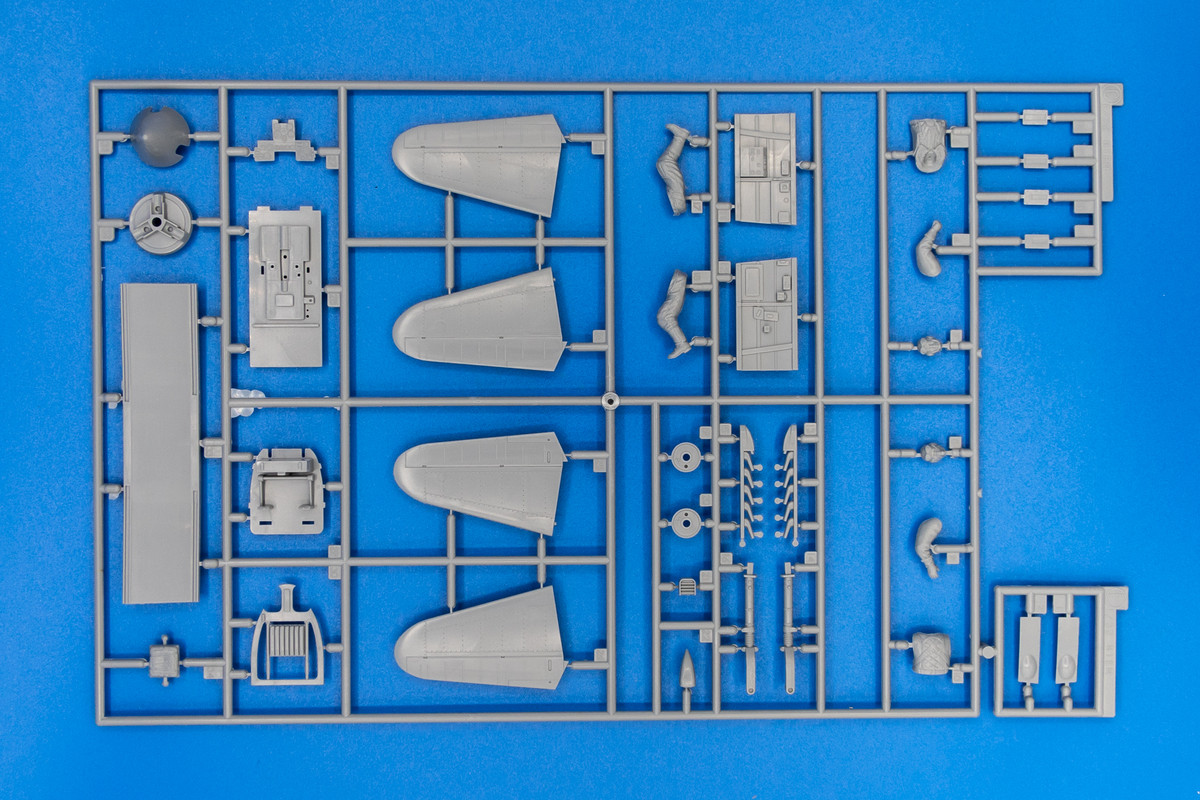
I can't paint figures for beans so this feature will not be utilized but I can't help but admire the nice molding of the pilot.
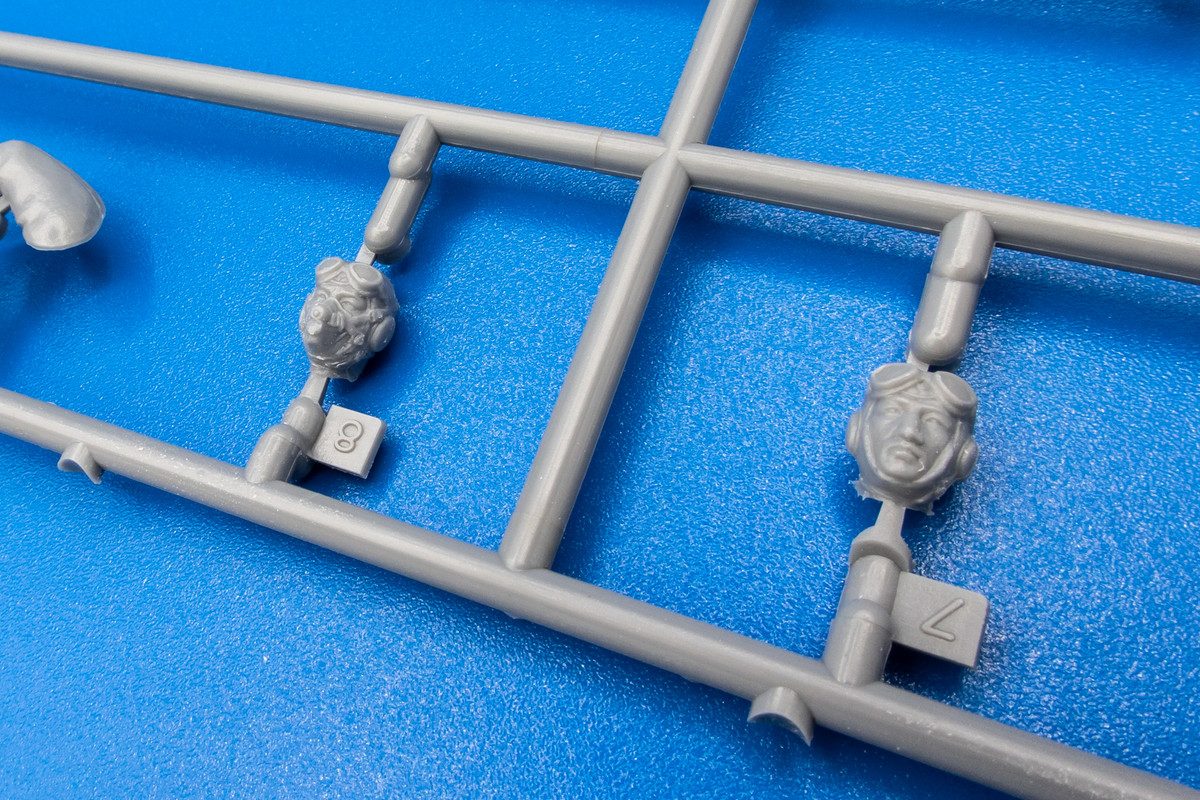
Although I am a fan of most of Hasegawa's choices, I do not like how they represent the instrument panel. While impressively detailed, I don't think you can get a good result trying to paint the individual gauge markings. And the raised detail will only distort the supplied instrument panel decal. It would be much better, in my opinion, to provide smooth circular instrument bezels so that the decals can lay flat.
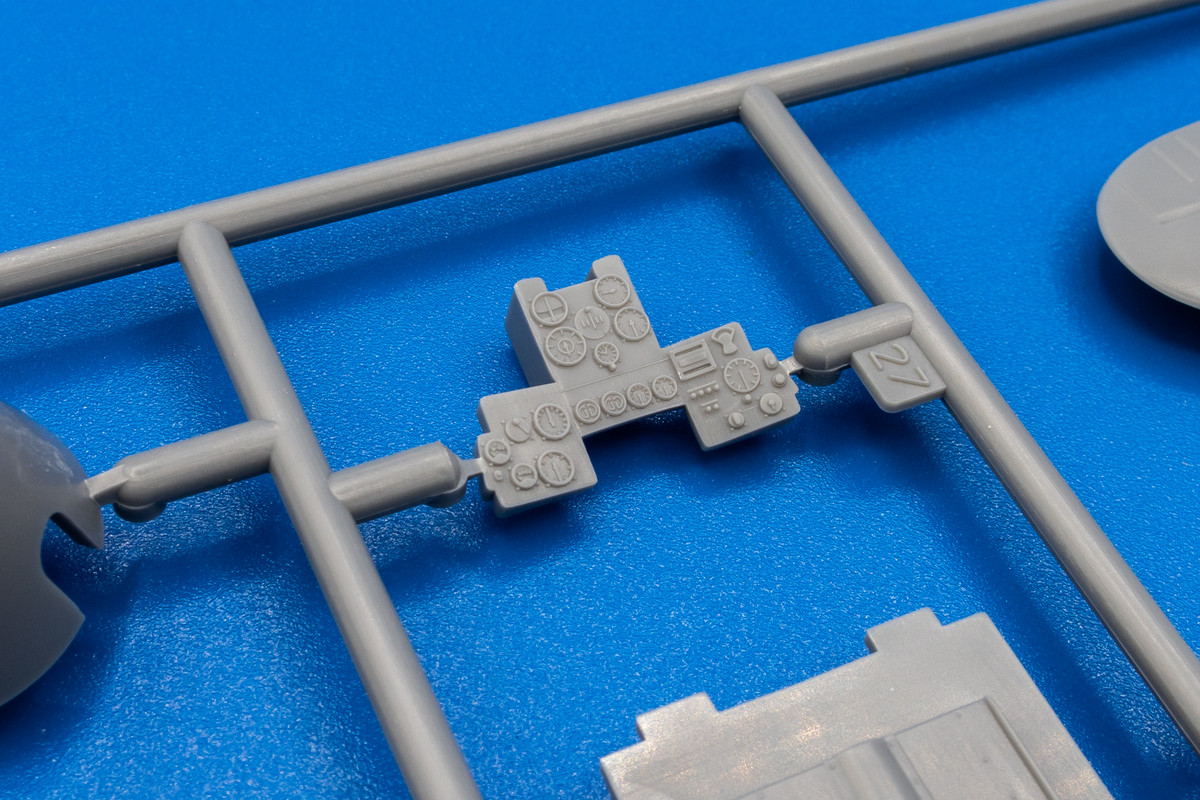
It's a shame that Hasegawa does not appear to be producing any new 1/32 aircraft models. I rather like Hasegawa's approach of not offering unnecessary and unseen details that can get in the way of overall fit.
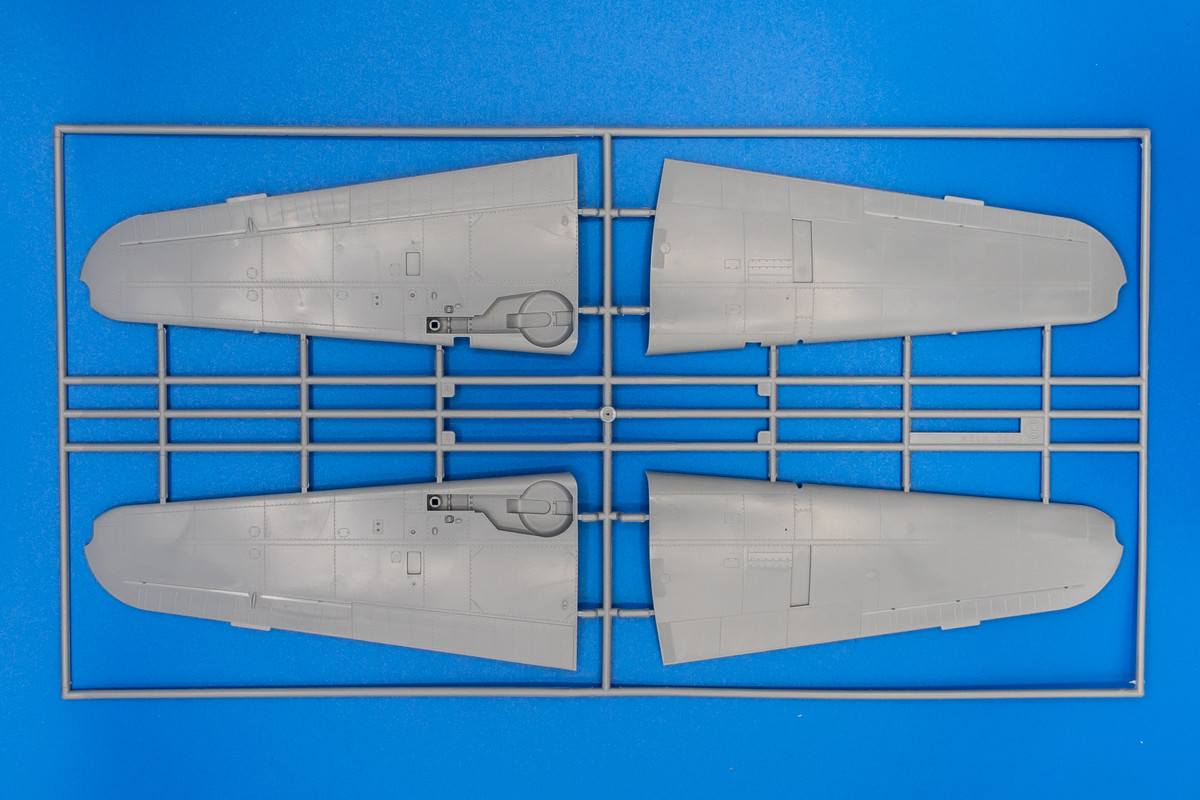
The wing assembly is somewhat unique in that the wing bottoms are separated just like the wing tops, which means, from a practical perspective, more glue seams to deal with. Hasegawa took a similar approach with the Bf109 kits and I didn't have any significant fit issues with their Bf109 K-4.
The wheel wells are molded integrally into the wing bottom parts and look a bit simplistic without any opportunity to add details like wiring. If this is how the real wheel wells look, that is a good thing!
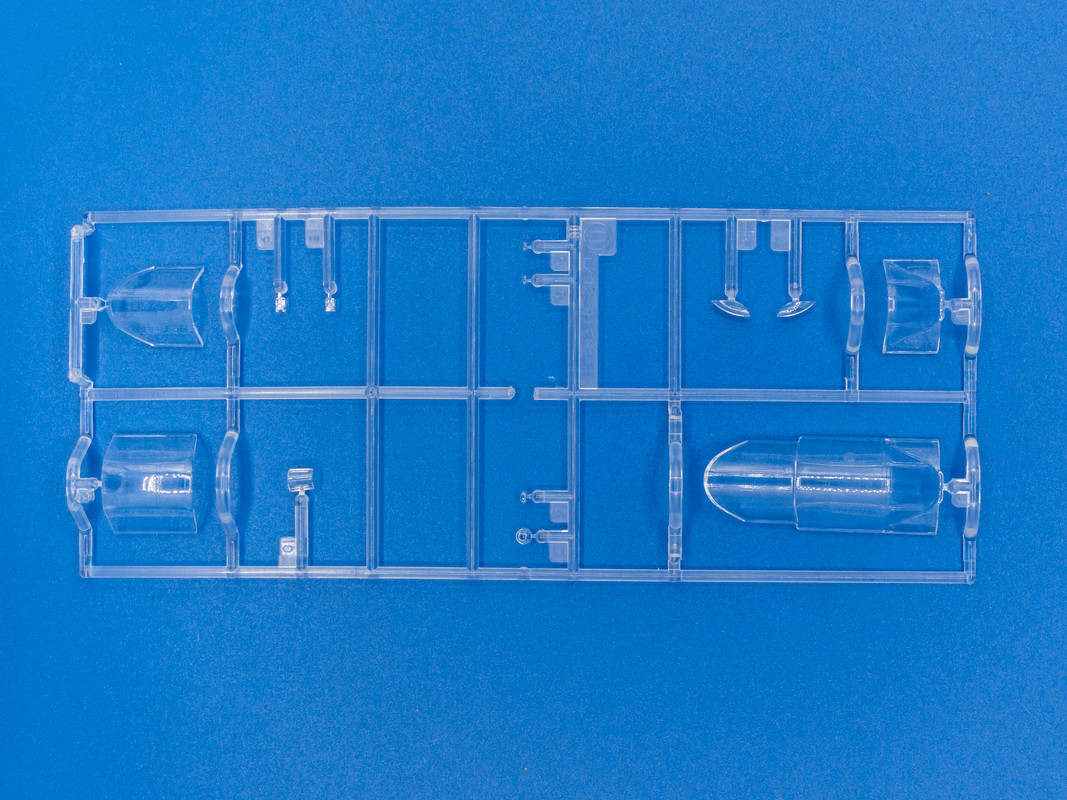
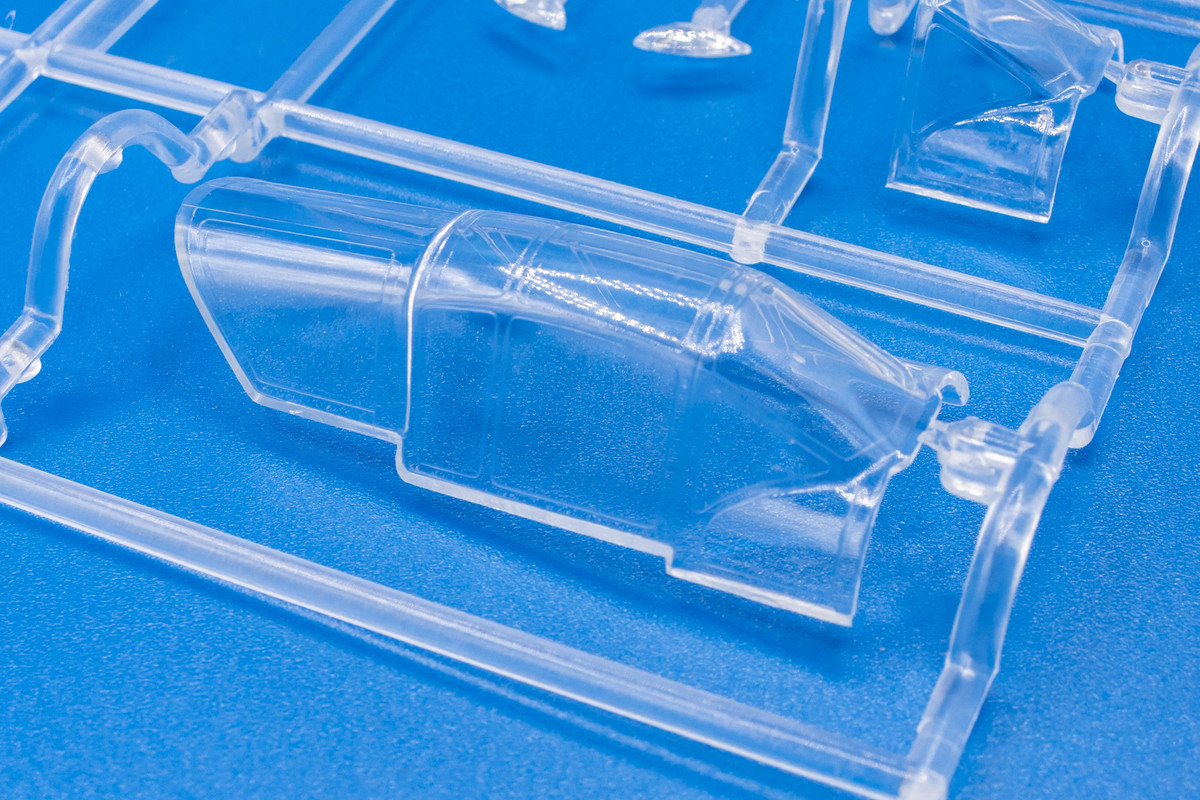
The clear parts include two sets of canopies, one to pose open and one to pose closed.
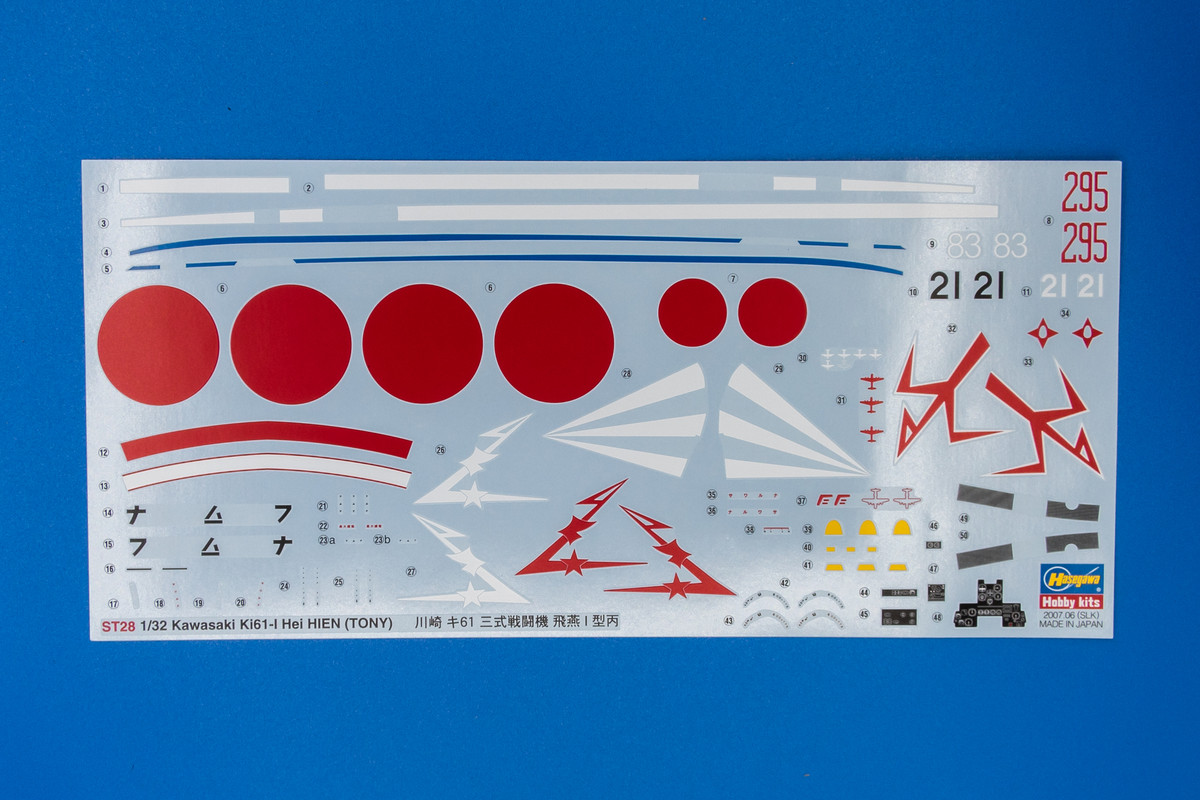
I typically avoid using the decals from Hasegawa and Tamiya kits. From a color and resolution perspective, they look good but I've found decal material to be noticeably thicker than from other decal makers such as Eagle Editions and Cartograph. The hinomarus and major markings will be painted using custom cut masks. I also have a set of Ki-61 decals by Wolfpack (printed by Cartograf) that I can utilize for the data stencils.
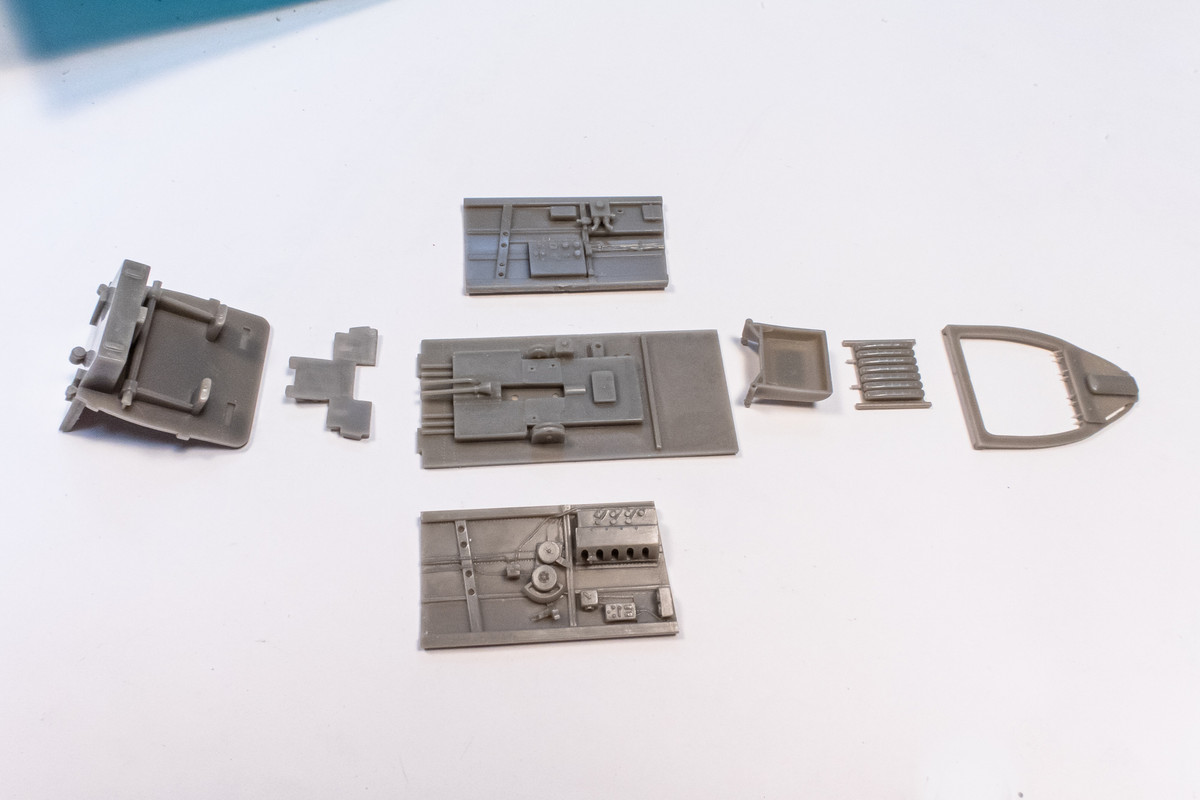
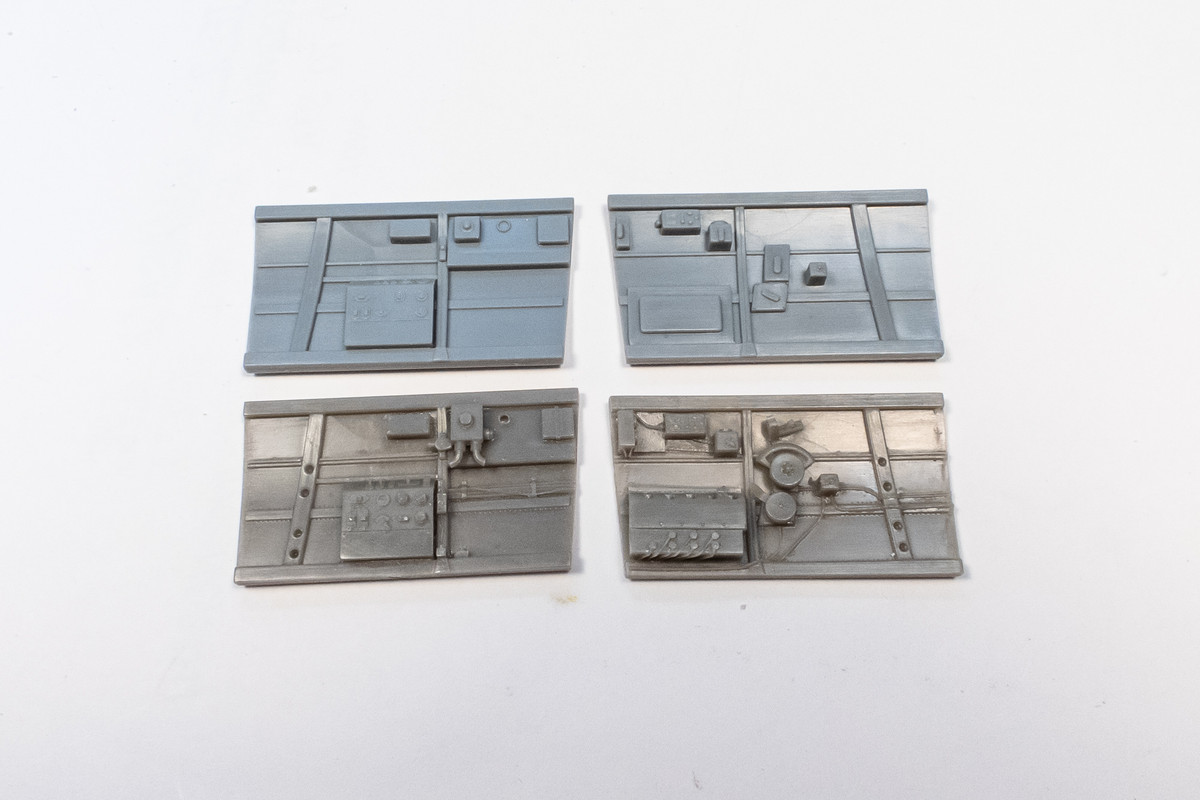
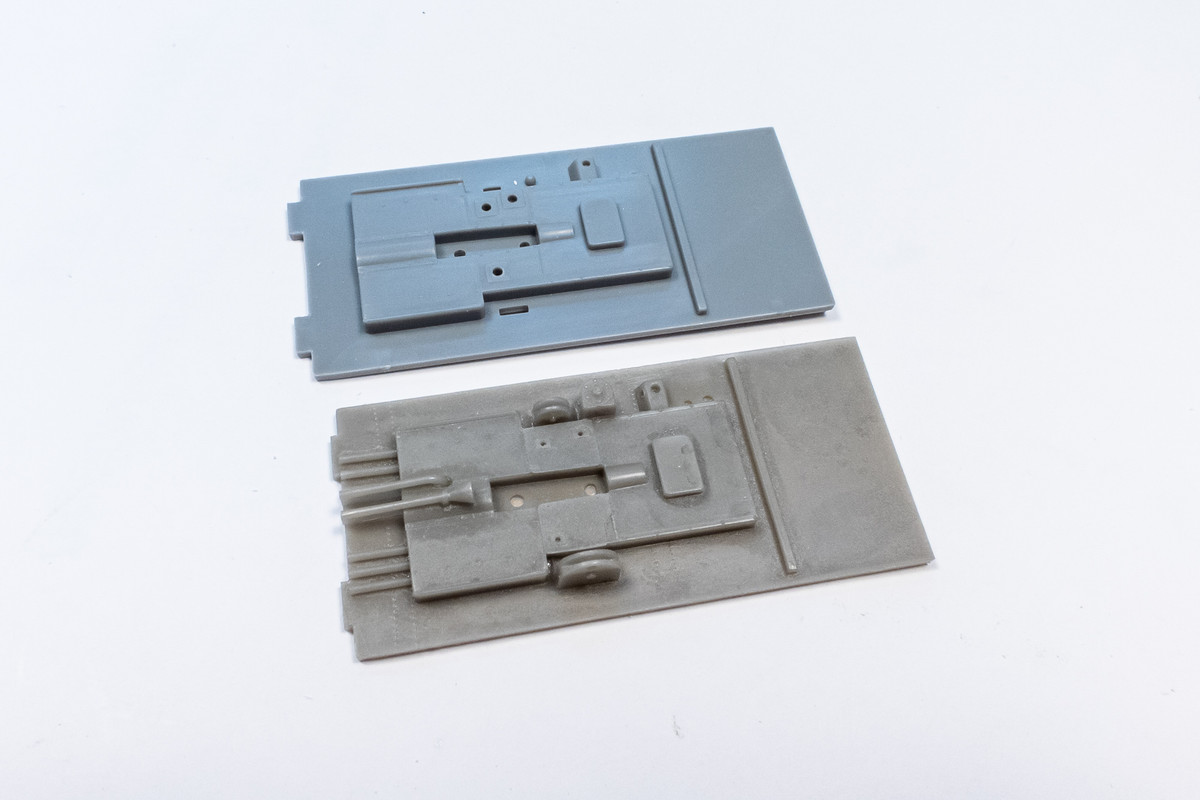
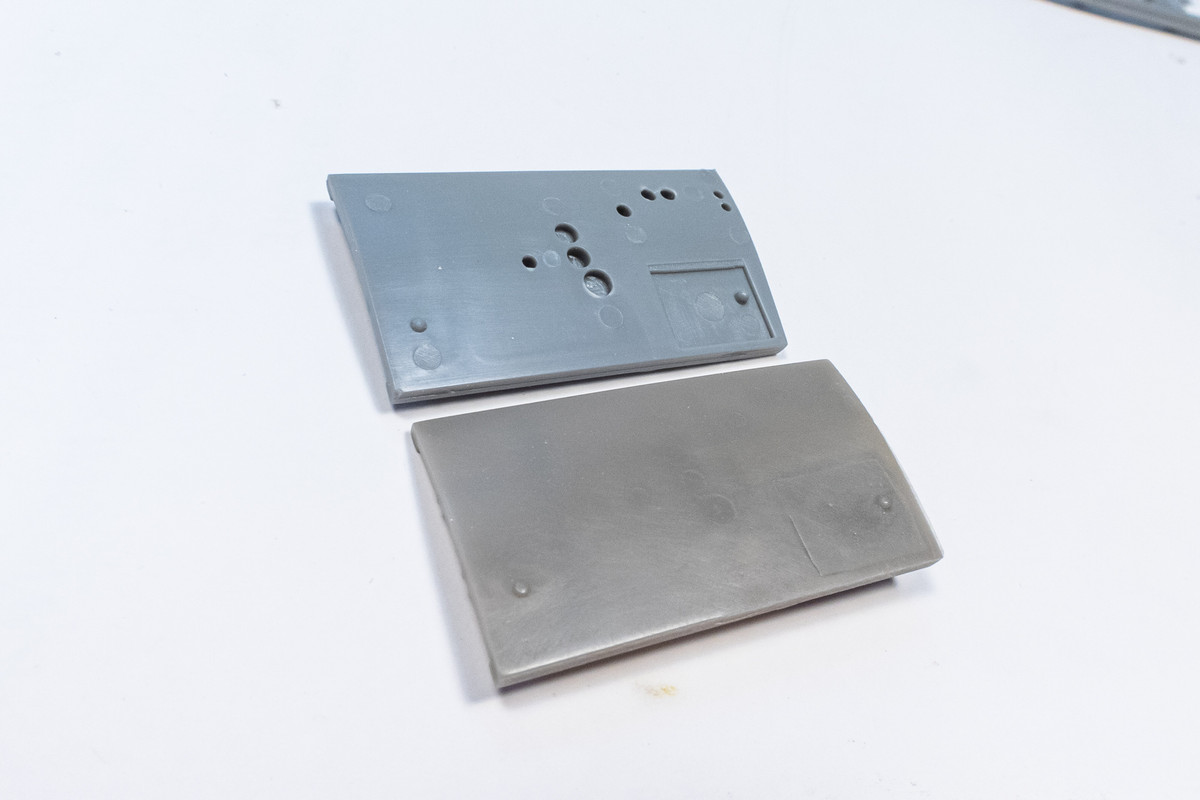
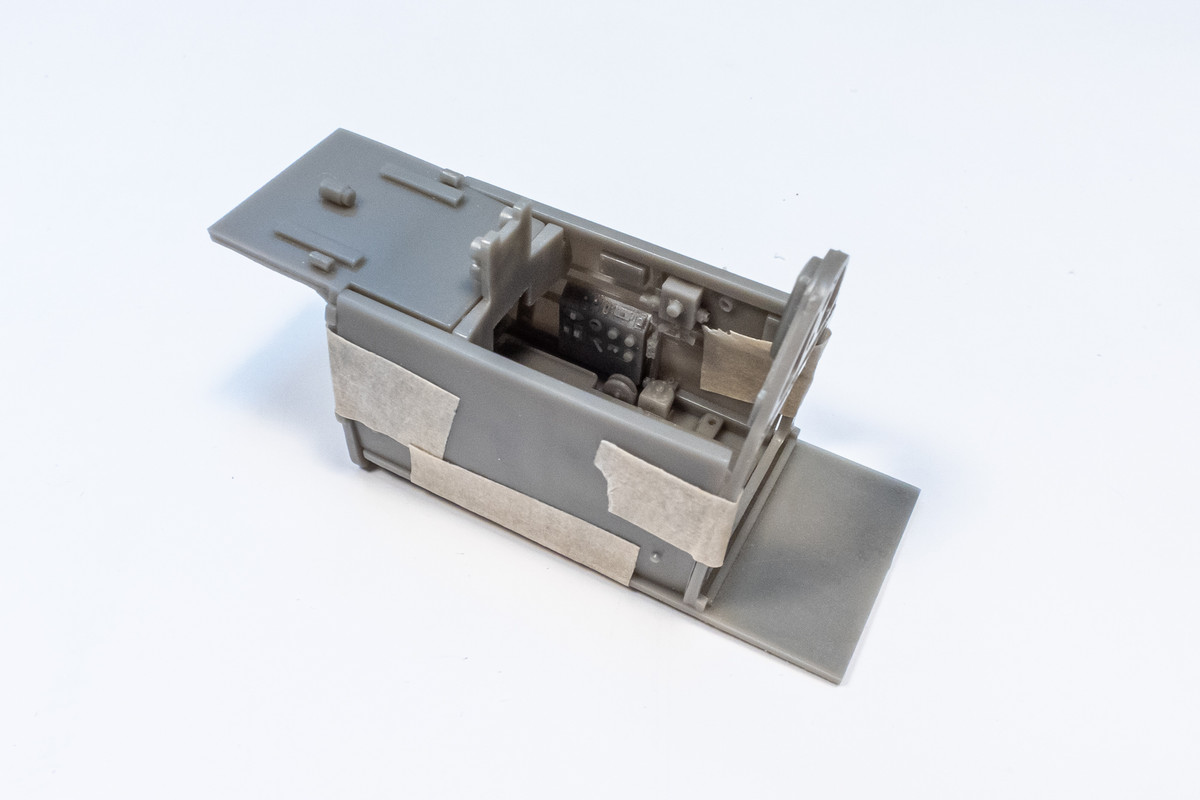
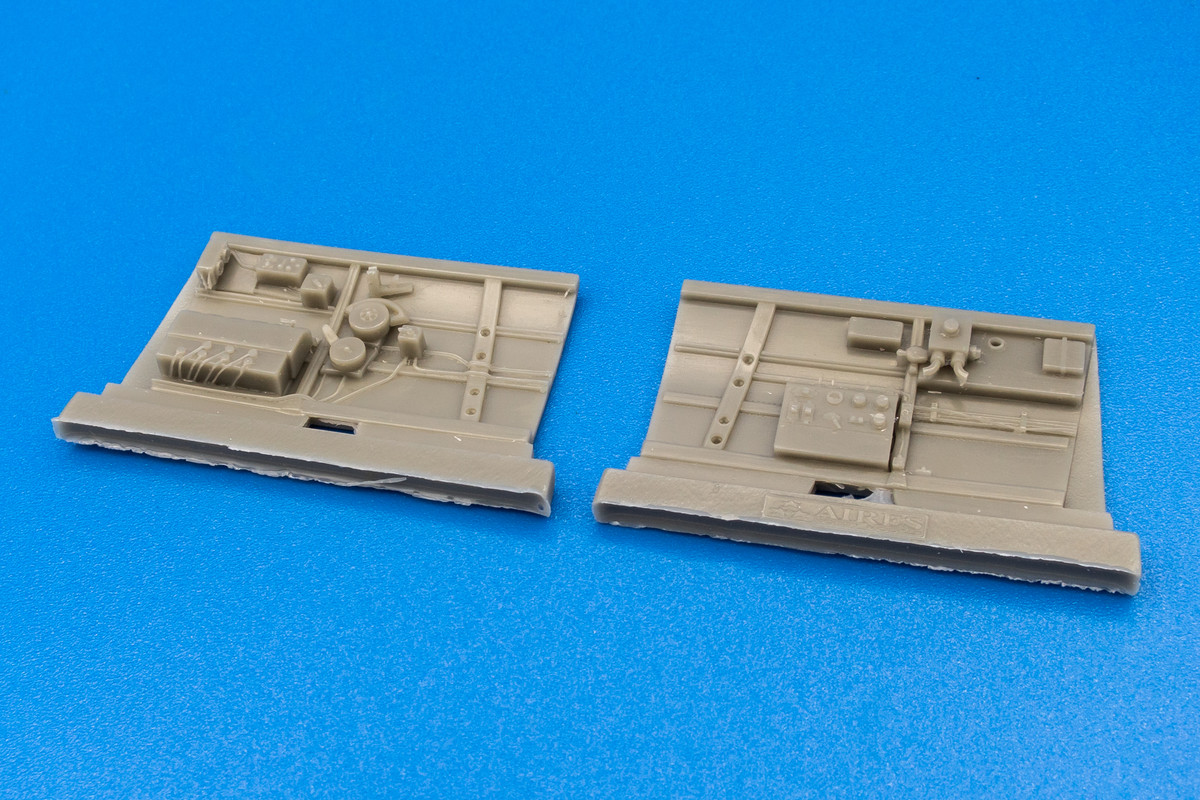
The kit-supplied cockpit looks to be fairly well populated with 20+ parts but I opted to include the Aires resin cockpit for this build since I felt the instrument panel, at a minimum, needed to be replaced.

The Aires set comes with a fret of photoetched details including an instrument panel face that will utilize a printed sheet of acetate for the dial details. I think this method yields excellent results although I wish Aires would've included some separate instrument bezels to "stack" on the panel to give the panel more 3-D relief.
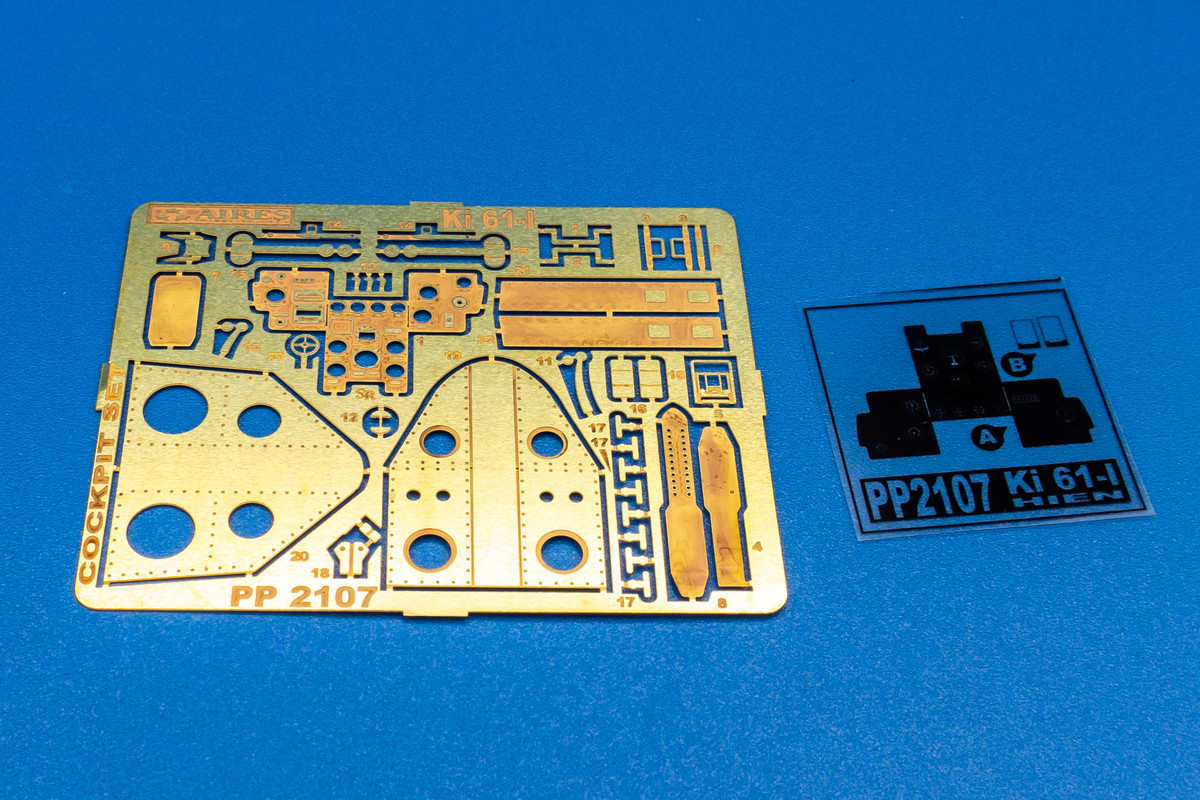
I know that Aires often carries a negative reputation of their parts not fitting but I've had mostly positive experiences with Aires stuff. From a detail perspective, they are excellent, especially if you compare the wiring detail to resin sets from Eagle Editions or MDC.
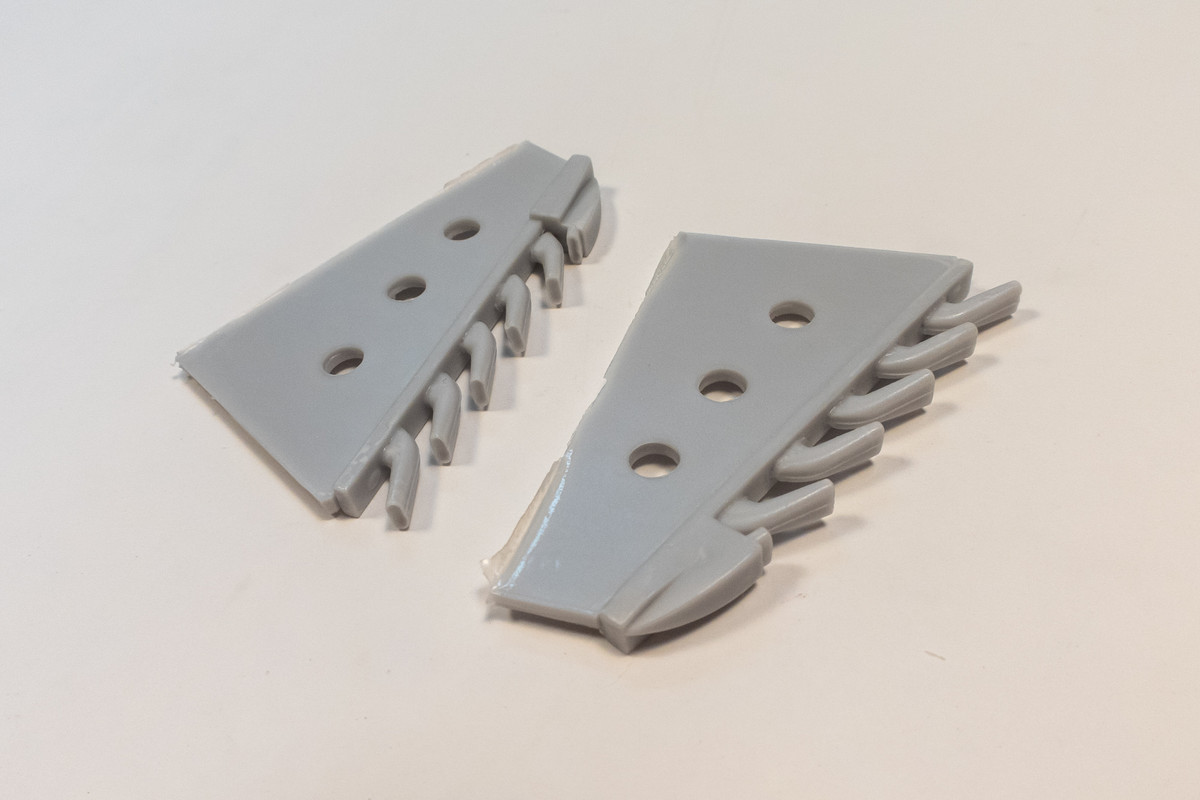
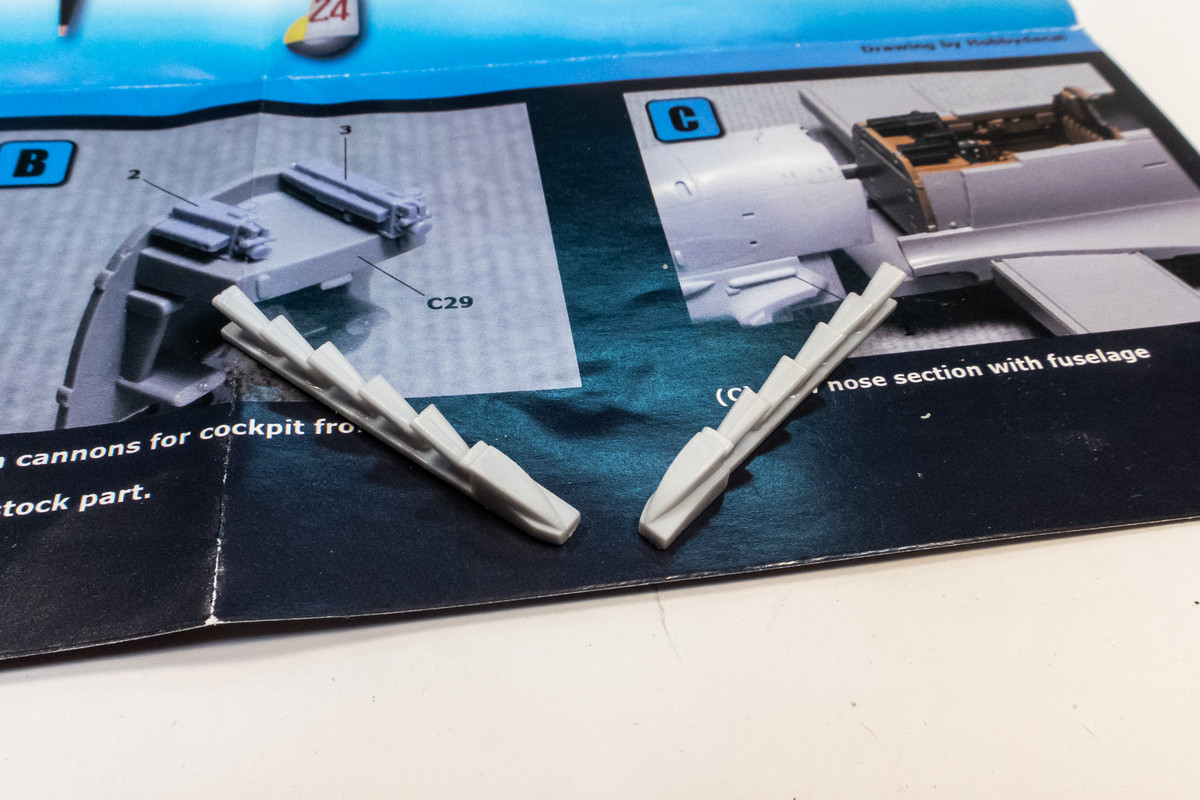
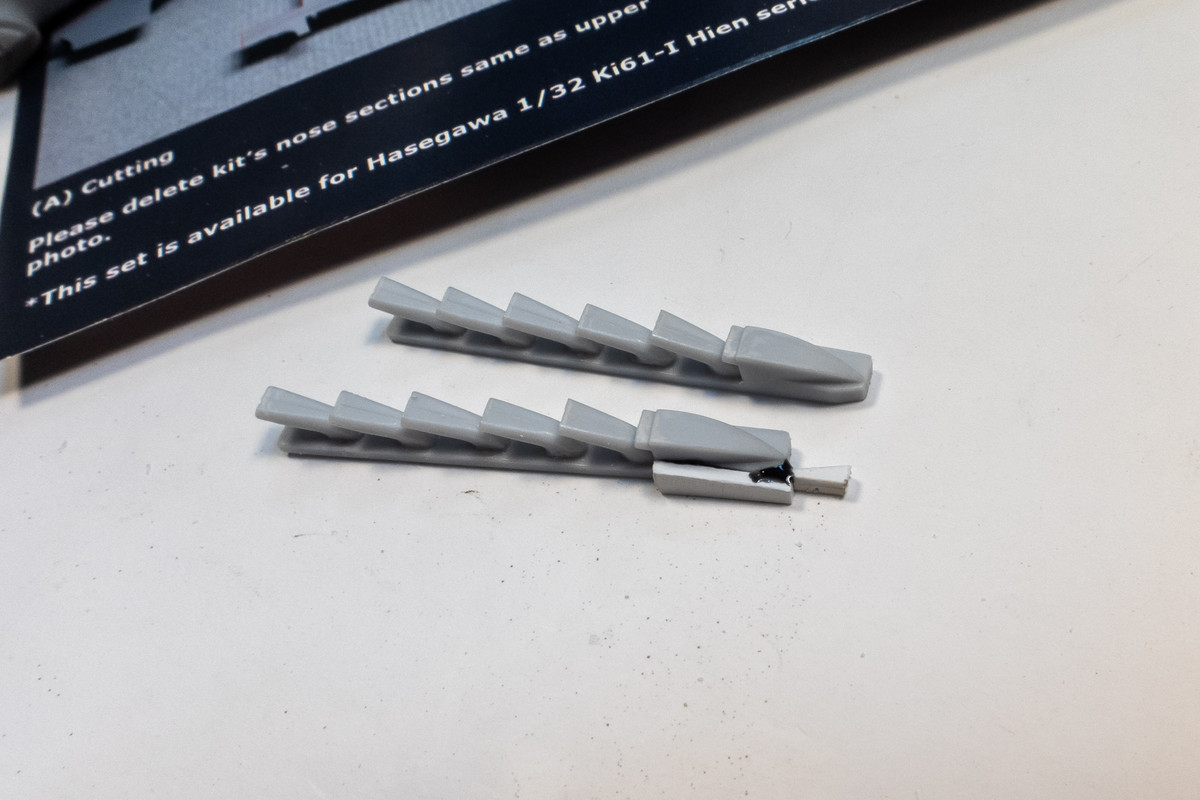
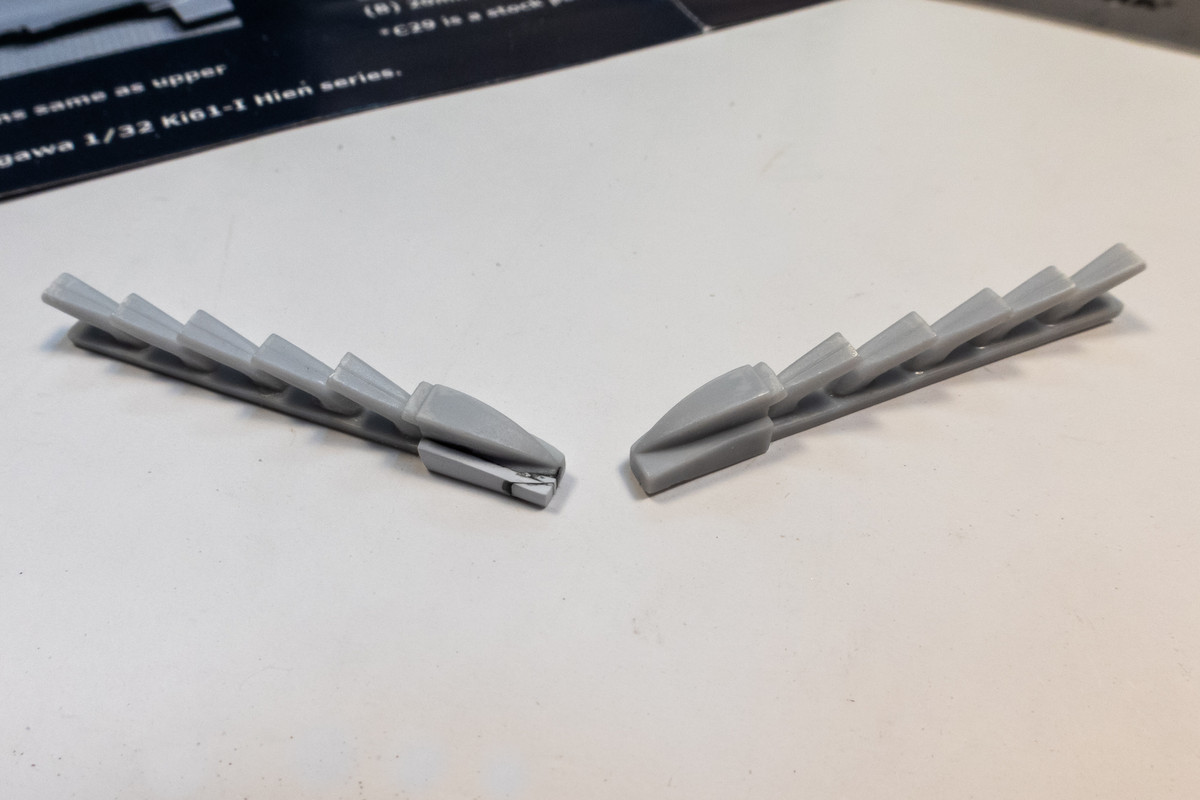
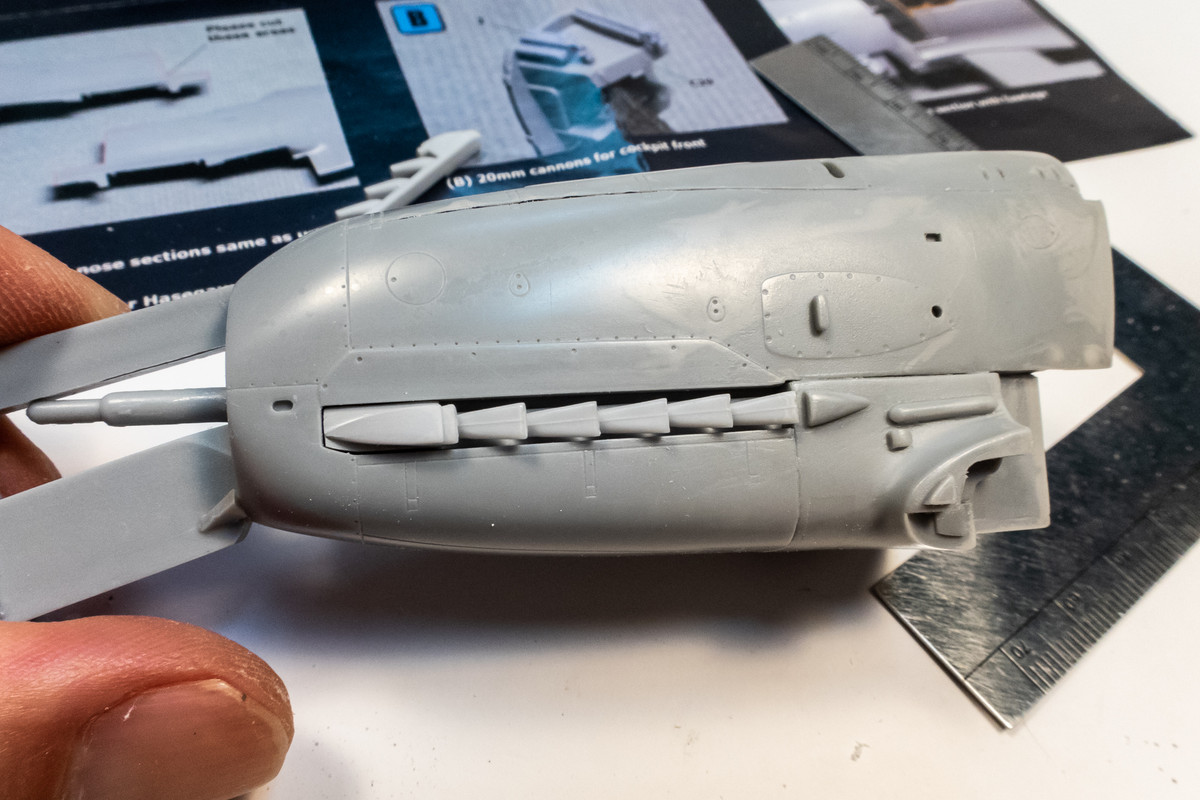
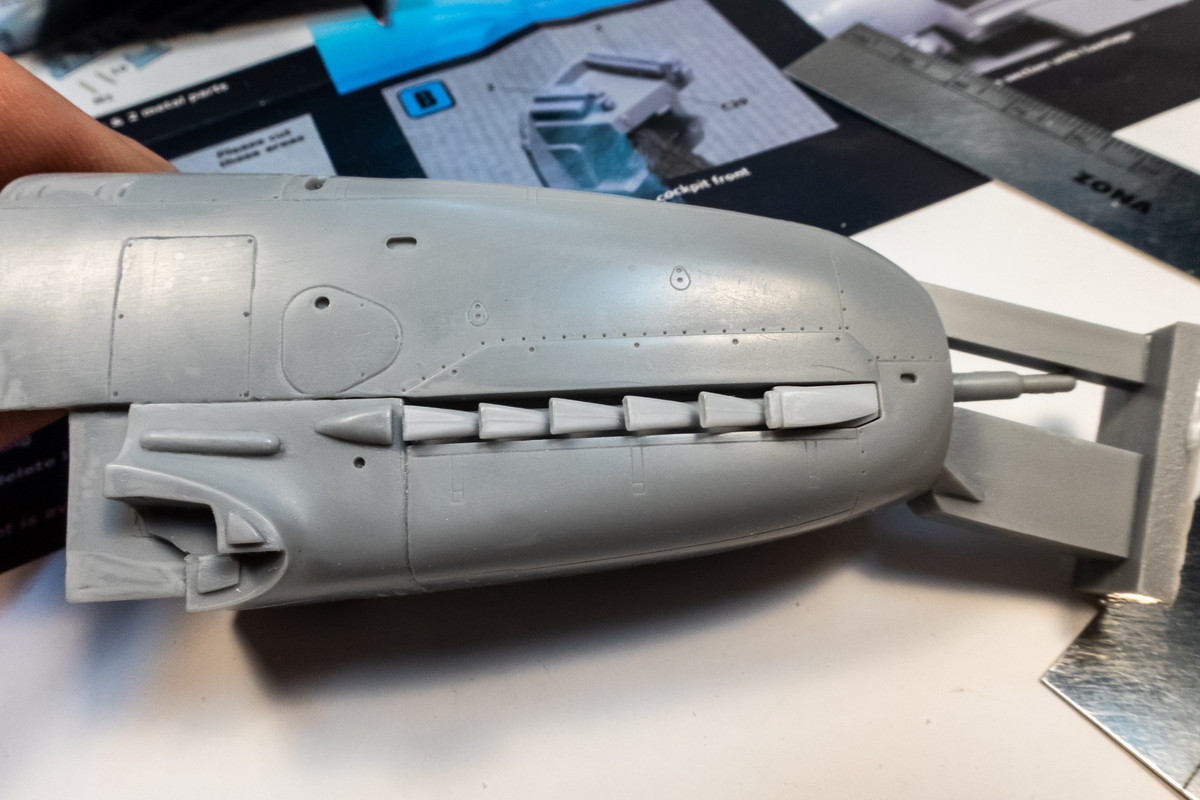
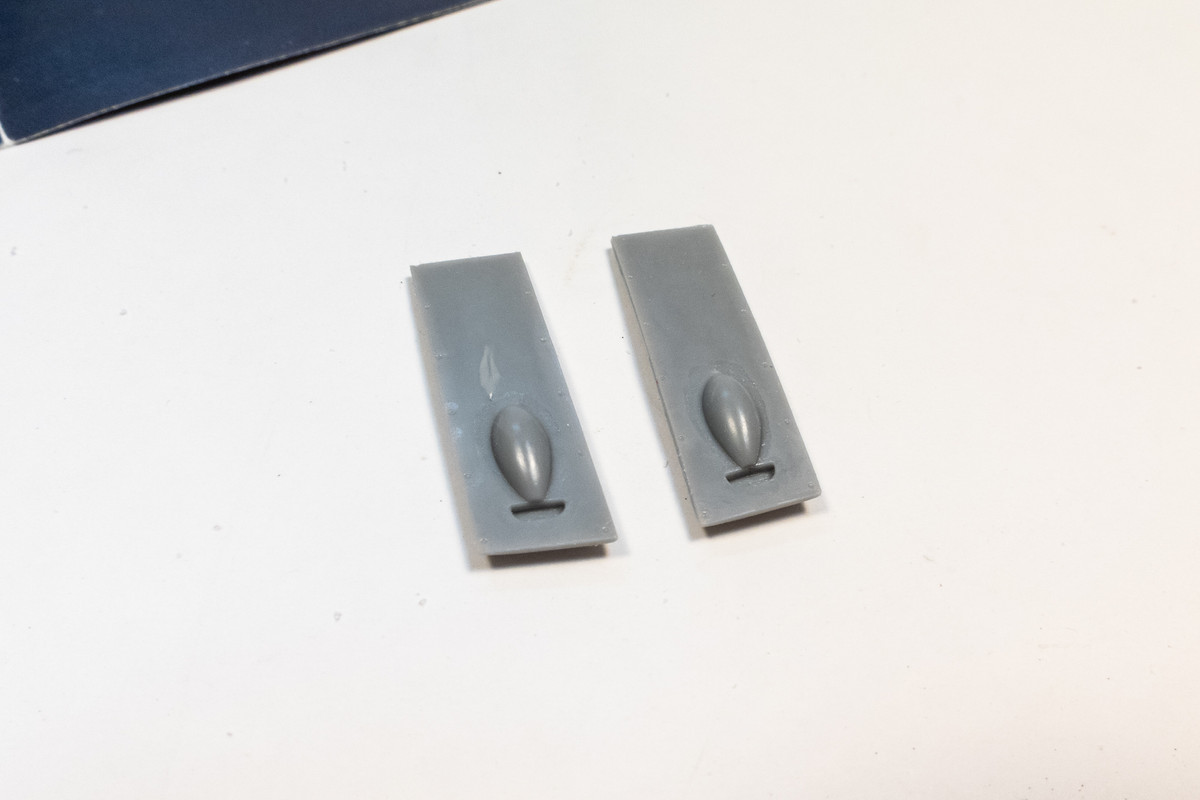
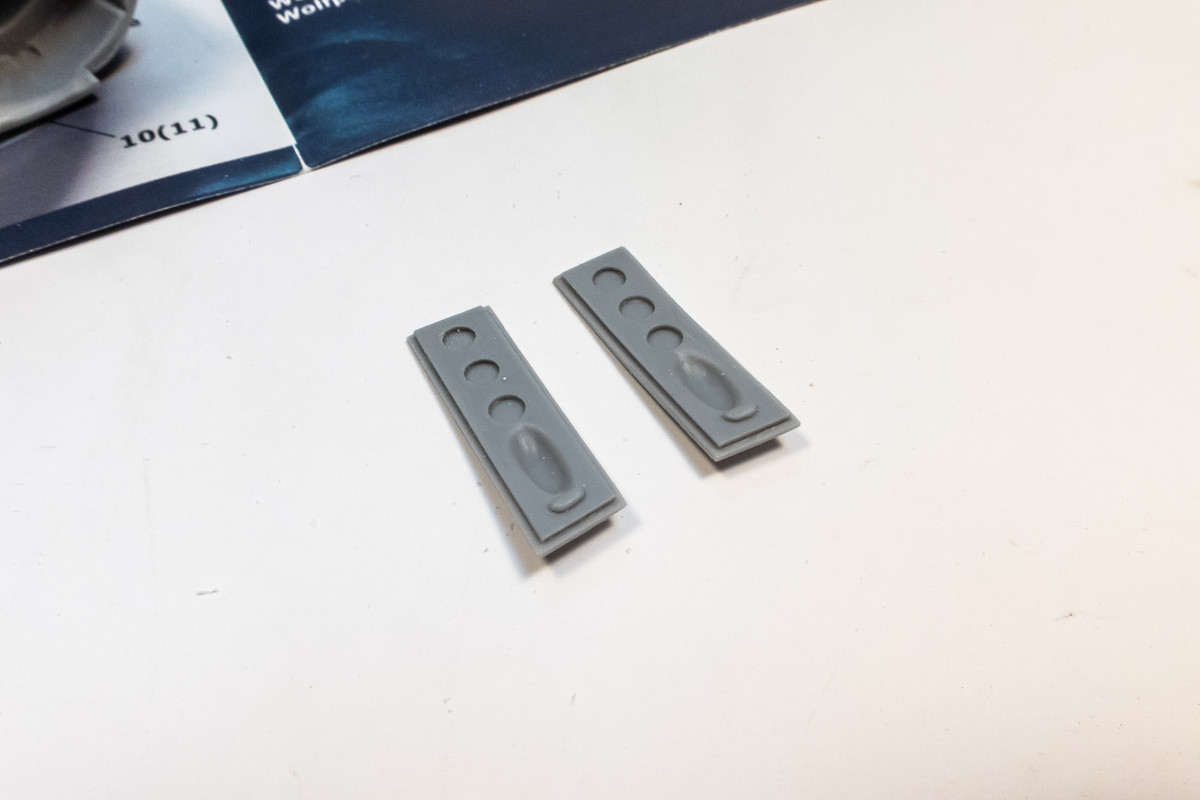
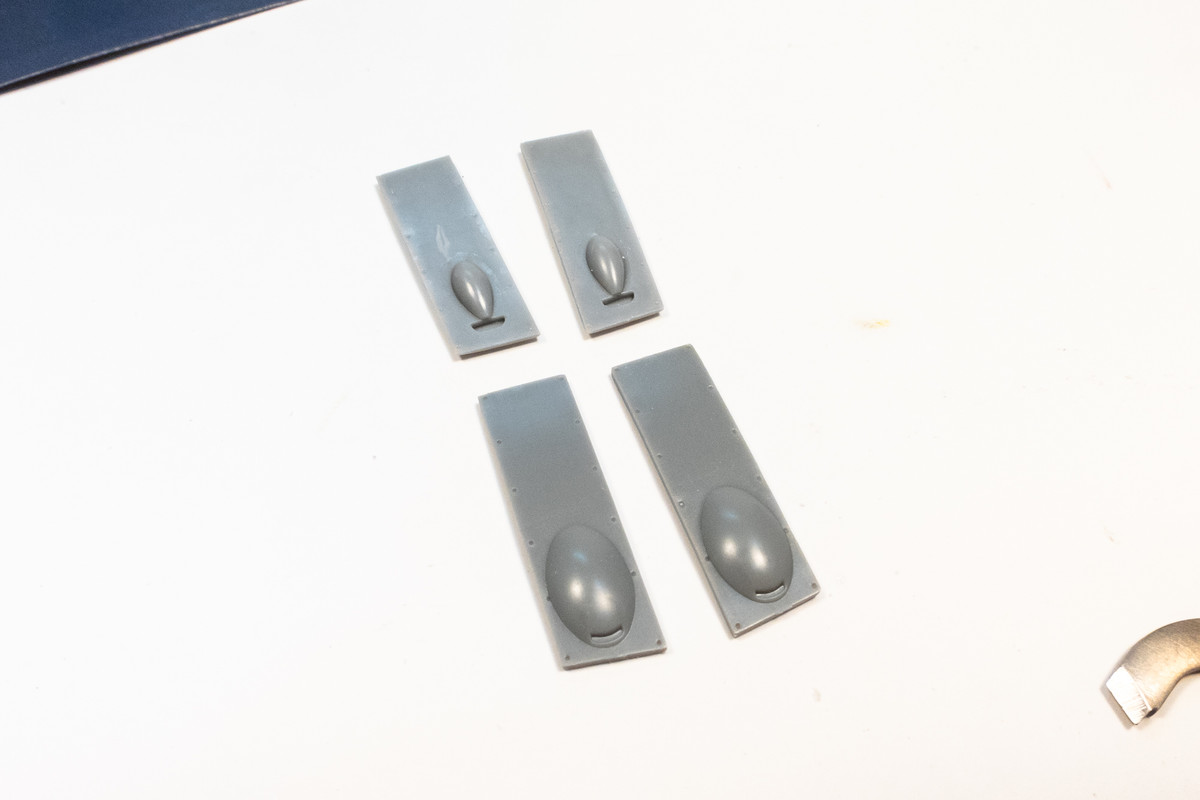
The other major aftermarket item that I'm adding is this resin nose by Wolf Pack. The Hasegawa kit represents the earliest variant of the Hien (Hei), with 12.7 Ho-103 cannons above the engine. The Tei variant upgraded those guns to 20mm Ho-5 cannon and required a lengthening of the nose. This resin upgrade offers the lengthened nose as well as some other bits that differentiated the Tei from the Hei.
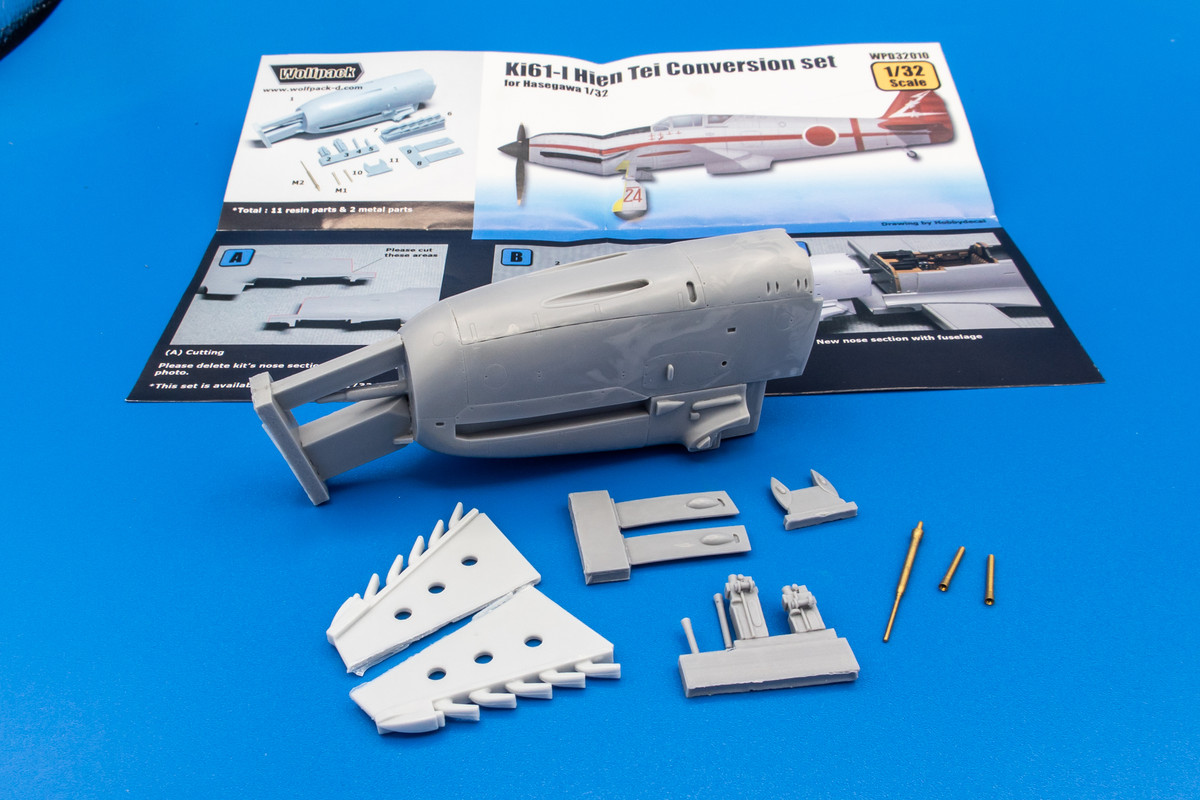
Next, I'll jump into Wolfpack set in more detail.