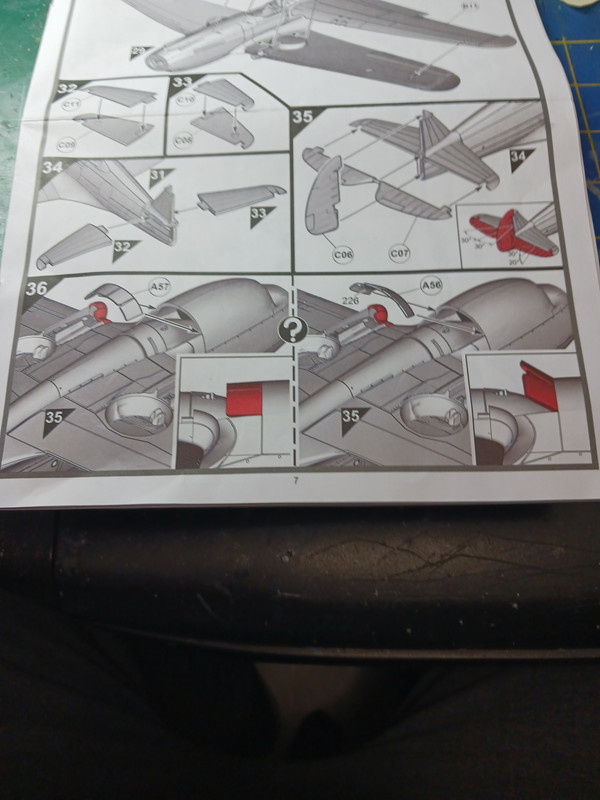
I have a perplexing question. The P-40 Warhawk kit gives me two choices to display the cowl flaps - open and closed. Can someone explain the differences and the benefit/use in open and closed positions? I'm currently on Step 36 in this build.
On an unrelated question which involves the P-47 Thunderbolt - the side turbo charger vents.
I did a Tamiya Thunderbolt kit and I chose to assemble it in open position. What are the benefits when are they opened or closed?
I know there is no right or wrong decision how to display them. I'm just curious on the meaning between open and closed positions.
“Who controls the skies, controls the fate of this Earth”
Author unknown- 352nd Fighter Group, Blue-Nosed Bastards of Bodney
“Send one plane it’s a sortie; send two planes it’s a flight; send four planes it’s a test of airpower. - Richard Kohn
Flaps are opened for take off and landing. Their purpose is to increase lift. They can drop while parked as they hydraulics bleed down, if the controls are not locked. Some aircraft do open their flaps for dive bombing as means to slow and improve the pilots aim… and some aircraft have combat maneuvering flaps to tighten their turn radius while dogfighting. But I don’t think that was a feature of the P-47.
"Surely I have made my meaning plain? I intend to avenge myself upon you, Admiral. I have deprived your ship of power, and when I swing 'round, I intend to deprive you of your life."
Carlos, the question is about cowl and intercooler flaps. Open on the ground for cowl flaps, in trail or partly open in climb, after that depends on cylinder head temps, closed on descent and approach, open after landing. Intercooler ducts are usually operated automatically but probably closed on the ground, open at high power settings.
Nice quick work on the Warhawk. Not familiar with the P-40 but have lots of references now for the P-47. Most photos of the P-47 on the ground show those intercooler doors in the open position.
jeaton01 wrote: ↑Sat Jan 28, 2023 1:58 pm
Carlos, the question is about cowl and intercooler flaps. Open on the ground for cowl flaps, in trail or partly open in climb, after that depends on cylinder head temps, closed on descent and approach, open after landing. Intercooler ducts are usually operated automatically but probably closed on the ground, open at high power settings.
This is exactly how I understood these to work as well. But, Stik raises a curious point on using them as a brake of sorts. I had never heard that before. Certainly makes sense and these pilots pulled out all the stops to win each engagement.
BrandonK
If you can't fix it with duct tape, you're not using enough duct tape.
jeaton01 wrote: ↑Sat Jan 28, 2023 1:58 pm
Carlos, the question is about cowl and intercooler flaps. Open on the ground for cowl flaps, in trail or partly open in climb, after that depends on cylinder head temps, closed on descent and approach, open after landing. Intercooler ducts are usually operated automatically but probably closed on the ground, open at high power settings.
Oops… I missed that part…
"Surely I have made my meaning plain? I intend to avenge myself upon you, Admiral. I have deprived your ship of power, and when I swing 'round, I intend to deprive you of your life."
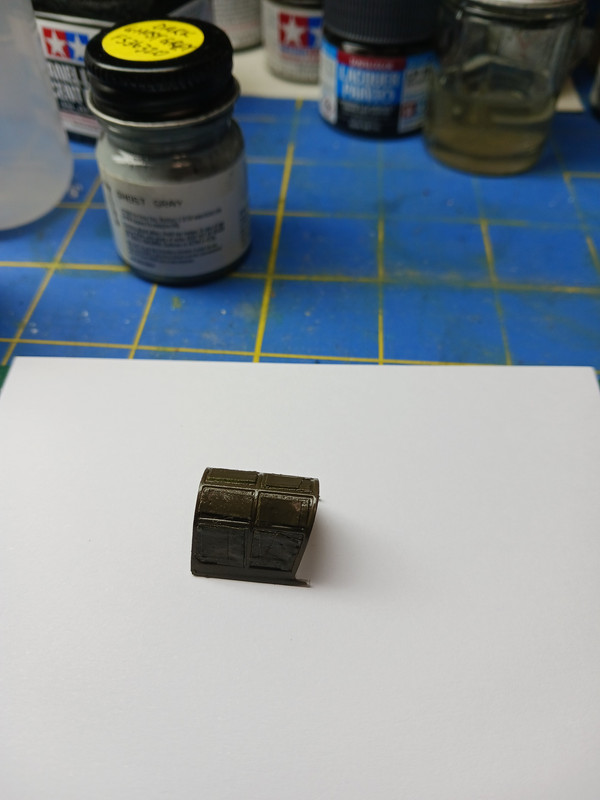
It's a good thing I didn't paint this bird Gunze/Mr. Color 73 Olive Drab FS34087. Waaay too dark
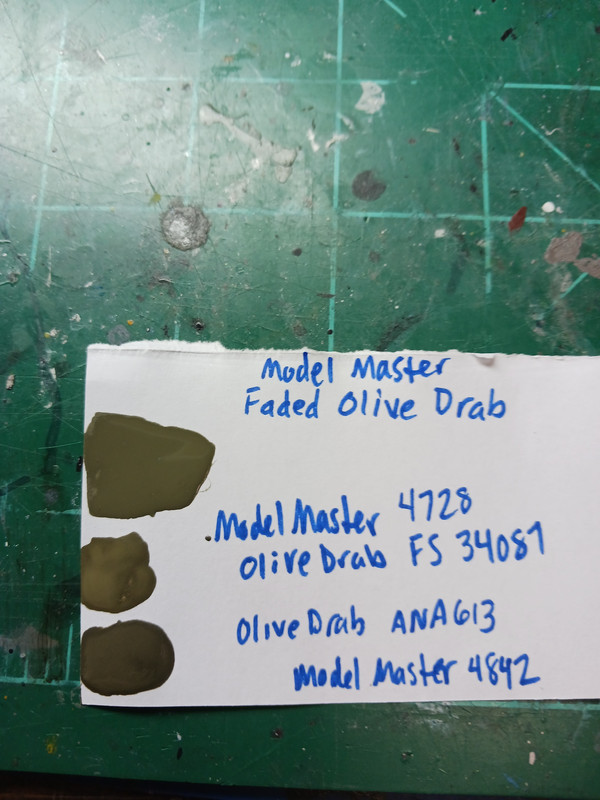
I tested 3 different Model Master Olive Drabs:
Faded Olive Drab
Olive Drab FS34087
Olive Drab ANA 613
I'm leaning towards using Faded Olive Drab - perfect for a bird that's been sitting in the tarmac under the Hawaiian sun at Pearl Harbor.
Sorry for the poor lighting. My magnifying lamp bulb blew out a couple le weeks back. The color swatches are still wet when I took the photo. I'll make a final determination once it's completely dried.
“Who controls the skies, controls the fate of this Earth”
Author unknown- 352nd Fighter Group, Blue-Nosed Bastards of Bodney
“Send one plane it’s a sortie; send two planes it’s a flight; send four planes it’s a test of airpower. - Richard Kohn